Category Archives: 19th century life

Sunday Check In

Last week I was adjusting to daily radiation treatments, so I never got around to writing my own or reading other people’s blog posts. This afternoon, I decided that I’m not going to be able to catch up reading other blogs, so I’ll just try to start fresh tomorrow.

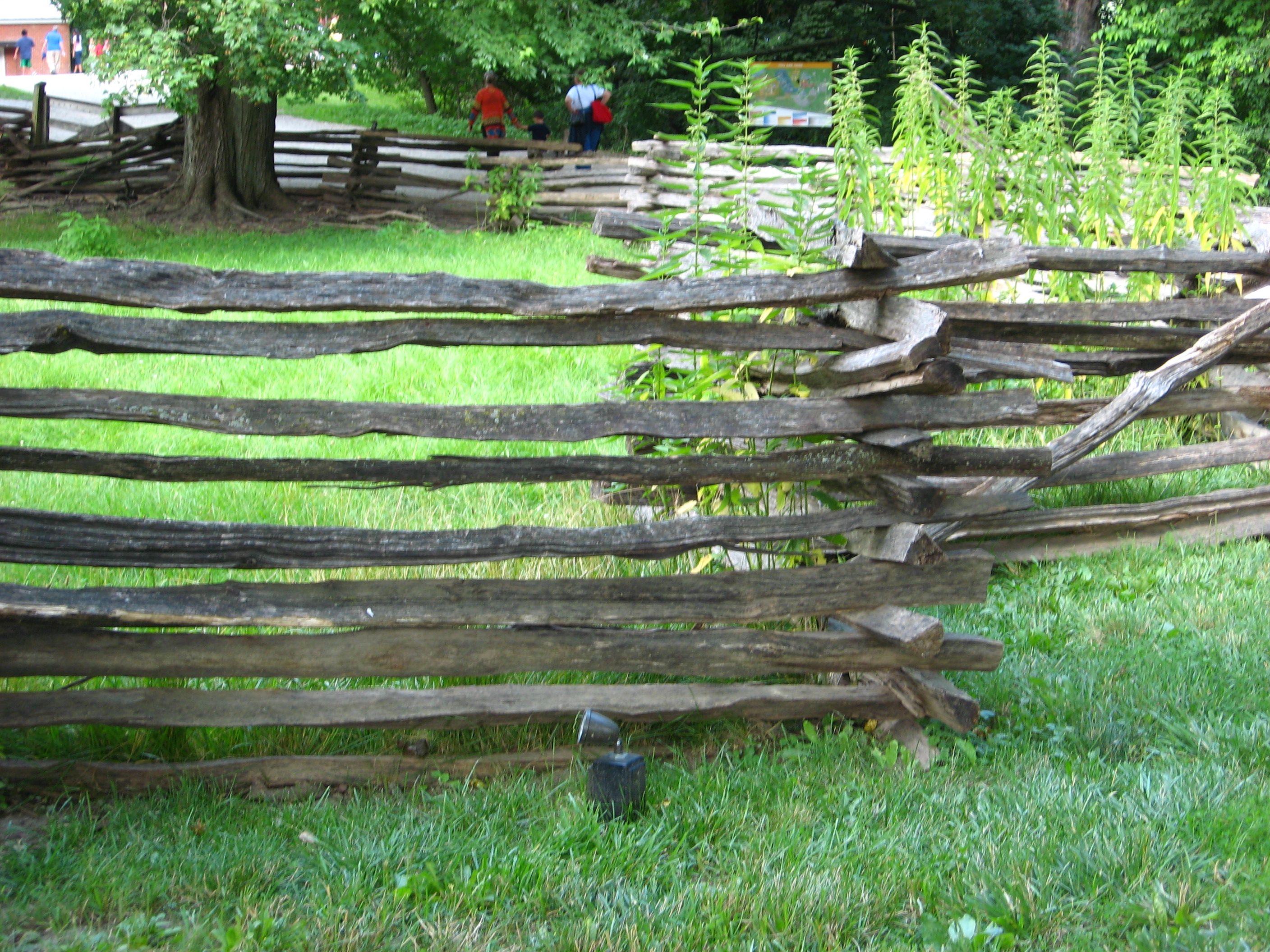
One thing I did last summer was to go to an interactive history museum as early research for my next novel, which is set in a frontier area. I think I might make it a regular practice to post a few pictures from that every Sunday. And I’ll start today.

split_rail

barn

crockery

9 Comments

Filed under 19th century life, Research

19th Century Life: Visiting Cards

Yesterday, as I was making breakfast, I found myself thinking about the 19th century custom of leaving visiting cards. I’m not an expert, but as I understand the custom, when two people had a mutual acquaintance or perhaps met casually at a social function, the visiting card was a way to check out whether they might develop a relationship. The scenario went something like this:

Mrs. Hopewell called on the home of Mrs. Fotheringale and left a card with a servant.

If Mrs. Fotheringale was interested in pursuing the acquaintance, she would call on the home of Mrs. Hopewell and leave a card.

Then Mrs. Hopewell would know that if she called on Mrs. Fotheringale during visiting hours, she would be admitted into the house.

And Mrs. Fotheringale could call on Mrs. Hopewell.

Thus, a social acquaintance was established.

I see a contemporary parallel in blogging, don’t you? I stop by a new blog, and “like” a post. The blog owner might then come by here and “like” a post. I visit his blog again and leave a comment. He might return the favor. Then we decide to follow each other’s blogs.

As they say, the more things change, the more  they stay the same, n’est-ce pas?

9 Comments

Filed under 19th century life

19th Century Life: Literature of the early 1800s

One of the many reasons Betsy wanted to live in Europe was to take part in literary society. It’s difficult to imagine this now, but two hundred years ago, there really wasn’t such a thing as American literature.

In contrast, British literature was flourishing.

The Scottish poet Robert Burns had published his poems in 1786. Perhaps the best-known is “To a Mouse,” with this famous stanza:

But Mousie, thou art no thy lane,
In proving foresight may be vain:
The best-laid schemes o’ mice an’ men
Gang aft agley.
An’ lea’e us nought but grief an’ pain,
For promis’d joy!

It’s usually translated into English as follows:

But little Mouse, you are not alone,
In proving foresight may be vain:
The best laid schemes of mice and men
Go often awry,
And leave us nothing but grief and pain,
For promised joy!

PG 1063Burns Naysmithcrop

Robert Burns, by Alexander Nasmyth, via Wikimedia Commons

In England in 1798, William Wordsworth had published his Lyrical Ballads, and Samuel Taylor Coleridge first published The Rime of the Ancient Mariner, which has these famous verses:

Day after day, day after day,
We stuck, nor breath nor motion;
As idle as a painted ship
Upon a painted ocean.

Water, water, every where,
And all the boards did shrink;
Water, water, every where,
Nor any drop to drink.

Gothic novels, such as The Mysteries of Udolpho by Ann Radcliffe (1794) were just beginning to be published. This would become a popular genre in the following decades.

France and Germany, too, had a wealth of literature during that time period.

In contrast, what did the United States have in the way of accomplished writers? Well, during the late 1600s, a couple of Puritans named Anne Bradstreet and Edward Taylor had published beautiful devotional poems. Here is one of the most well-known of Taylor’s stanzas:

Make me, O Lord, thy spinning wheel complete.
Thy Holy Word my distaff make for me.
Make mine affections thy swift flyers neat
And make my soul thy holy spool to be.
My conversation make to be thy reel
And reel the yarn thereon spun of thy wheel.

Although their poetry is still admired today, I doubt that their works had much appeal for Betsy. She was decidedly worldly in her tastes and interests.
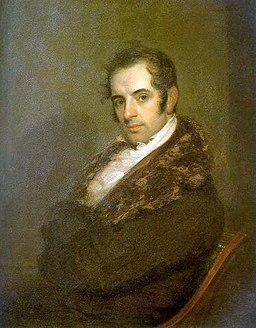
Portrait of Washington Irving by John Wesley Jarvis in 1809

Portrait of Washington Irving by John Wesley Jarvis (1809), via Wikimedia Commons

In 1802, Washington Irving began to publish the first of his satirical essays. I can easily imagine Betsy reading and enjoying those. However, there really was not much else for an American with literary interests to take pride in. Irving’s fiction would not appear for nearly two decades, and the works of Hawthorne, Melville, Emerson, and Thoreau would not be published until mid-century.

And perhaps most astonishing to me of all, in my research I discovered that New York City probably had only one theatre!

Once she arrived in Europe, Betsy was able to attend salons where intellectual ideas were discussed and meet famous writers and artist. She even became close friends with a few well-known women writers. I’ll talk about a couple of these later this week.

4 Comments

Filed under 19th century life

19th Century Life: American vs. European Cities

One question that my early test readers of The Ambitious Madame Bonaparte asked me was why Betsy wanted to live in Europe so badly. What did she have against her own country?

In our current time period, when the United States is the most powerful country in the world and U.S. culture is a dominant global force, it’s hard to realize what the country was like two hundred years ago. The difference between living in an American city and living in a European capital was like the difference we’d experience between living in small-town Wisconsin and Chicago.

Look at the two graphs below, which I created using statistics I found on the Internet.

european cities 1800

U.S. cities

To further drive home the difference, here is an image of Paris in the early 1800s:

Place des Victoires by Victor-Jean Nicolle

Place des Victoires by Victor-Jean Nicolle, via Wikimedia Commons

And here is the description I wrote in the novel of Washington, D.C., in 1804:

The next day, Aunt Nancy took Betsy and Jerome on a carriage tour. After Congress had decided in 1790 to build the nation’s capital in a newly created federal district, President Washington commissioned civil engineer Pierre Charles L’Enfant to devise a plan. Originally from France, L’Enfant wanted to construct a city in the European style with important buildings set far apart to allow for public gardens and plazas. At the time of Betsy and Jerome’s visit, the wide spaces between public buildings were occupied by a mix of uncleared land, small plots with cabins, and recently built houses—giving the city of Washington the disconcerting appearance of a sparsely settled wilderness with a few grandiose structures set down at random. Stories abounded of Congressmen going squirrel hunting within the city or getting mired in a swamp as they drove to their quarters at night.

Betsy was clever, ambitious, and interested in art and literature. Is it any wonder she wanted to be in Europe where the action was?

6 Comments

Filed under 19th century life

19th Century Life: Madeira

One of the most popular wines during the early years of the United States was the wine called Madeira. Thomas Jefferson enjoyed it, and according to some reports, the wine was used to toast the Declaration of Independence. Madeira comes from the Portuguese island of the same name, which has a rich volcanic soil. The early United States had no vineyards, so all wines had to be imported, and Madeira has special qualities that allowed it to survive the long, precarious ocean crossing.

During the Age of Exploration, ships often stopped by Madeira to stock up before a long voyage, so the wine makers began to add spirits to the wine during the fermentation process to help preserve it. The other interesting feature about Madeira happened by accident. An unsold shipment of wine returned to the islands and the wine makers discovered that the heat and movement the wine had been subject to during its travels had actually changed its flavor. Manufacturers wanted to recreate this quality, so they began to heat the wine  and expose it to oxygen. The resulting wine’s ability to withstand the rigors of lengthy voyages made it perfect to ship to the American market.

There are many styles of Madeira, made from different grapes. Some are dry, and others are sweet. The most popular variety in Baltimore, Betsy’s hometown, was a variety called Rainwater. It was a pale, delicate variety usually made from Tinta Negra Mole grapes. There is an interesting story about how it got its name. According to legend, some casks were left out on the dock and became diluted when it rained. The unscrupulous dealers sold the wine anyway, and lo and behold, their American customers liked it.

Rainwater Madeira is difficult to find now as it has fallen out of fashion. I’d love to try it sometime, though, just to taste something that Betsy must have tasted.

Leave a comment

Filed under 19th century life

19th Century Life: Bodily Functions

Two years ago when I was visiting Baltimore for research, my husband and I toured the Homewood House Museum. Homewood was the mansion of Charles Carroll, Jr., son of Charles Carroll of Carrollton (the only Catholic to sign the Declaration of Independence). Today, Homewood is beautifully restored, decorated, and furnished to authentically represent how it originally looked. It’s located on the campus of Johns Hopkins University, and I strongly recommend visiting it if you’re ever in Baltimore.

Elizabeth Patterson Bonaparte almost certainly attended parties at Homewood in its heyday. Not only were the Pattersons and Carrolls both leading Maryland families, they were also intimately connected. In 1806, Betsy’s older brother Robert married Charles Carroll, Jr.’s niece, Marianne. So Homewood was a must-see for me. The day we visited, I told the woman who was going to be our guide that I was there to do research for a historical novel, but I did not name my subject. I was scrupulous about keeping that information private until I finished my manuscript.

As we toured the mansion, our docent led us into a room they have furnished as Mrs. Carroll’s dressing room. Almost directly in front of where I was standing was what looked to be a small, low mahogany table with slender neoclassical legs. Set within an arch-shaped opening in the “table” was a recessed silver basin. (You can see it in the third image on this page.) The docent announced in a somewhat amused voice that this piece of furniture was a bidet that had once belonged to Betsy Bonaparte. The docent didn’t elaborate—and because I was keeping my special interest in Betsy a secret—I didn’t press her for information. I must admit that I had a very difficult time keeping a straight face.

You see, up until that moment, I hadn’t really thought about Betsy in terms of her bodily functions, so unexpectedly encountering her bidet was disconcerting. It turned out, however, to be enormously helpful to me as a novelist, because it allowed me to think of her in an earthier way. She became more of a flesh-and-blood woman to me than just a hazy historical figure.

After we returned home, I did some Internet research and found an article originally published in the Baltimore Sun (Rath, Molly, “You Never Know What Will Turn Up Among the Collectibles at the Maryland Historical Society,” November 20, 1994). According to that article the silver basin in the bidet was inscribed with the name of Napoleon’s own silversmith. I can only assume that Jerome gave it to Betsy after they married—or bought it for their home.

The article also mentioned that Betsy carried a porcelain bourdaloue with her when she traveled. A bourdaloue is basically a fancy, French porta potty shaped something like a gravy boat—a handy thing to have for those long 19th-century carriage rides. I find it difficult to imagine Betsy hiking up her skirts and taking a tinkle in a public coach, but maybe she used it in the shrubbery during stops along the way. And she and Jerome did travel extensively in their own privately owned coach and six, so theoretically, she could have used it there.

Both the bidet and the bourdaloue were left to the Maryland Historical Society (MdHS) by Betsy’s grandson. At first, the curators at MdHS didn’t realize what the bourdaloue was. Thinking it was an extra large sauce dish, they put it on display as part of a table setting—until a porcelain expert enlightened them about its true function.

Since Betsy was known for her sharp sense of humor, I feel certain she would have been amused.

205 Bourdalou mit Blumenmalerei Frankenthal c1756-1759
A Sample Bourdelou (not Betsy’s), Photograph by Austin Towers, via Wikimedia Commons

11 Comments

Filed under 19th century life

19th Century Life: Gloves and Shoes

Today we return to the subject of clothing in the 1800s. In all the movies made of Jane Austen novels, we see young women attending balls wearing flimsy, lowcut, empire-waist dresses with long, elbow-length, white gloves.

When I was growing up in the 1960s, I always assumed those gloves were made of cloth the way my mother’s formal gloves were. Well, I was wrong. The gloves that Betsy Bonaparte would have worn to a ball (and she loved to go to parties) would have been made of white kid. I can’t imagine how hot it must have been to dance while wearing leather gloves covering nearly the entire arm.

Speaking of white kid, the Maryland Historical Society has a pair of white kid shoes that belonged to Betsy Bonaparte in her eighties. Even as a woman of mature years, she wanted to be fashionable and wore pumps with heels.

That brings me to a final oddity about 19th-century fashion. Did you know that in the first half of the century, there was no such thing as right and left shoes? Both shoes in a pair were shaped exactly the same. The next time you have difficulty breaking in a pair of shoes, just thank your lucky stars that you didn’t live in Betsy’s day!

Leave a comment

Filed under 19th century life

19th Century Life: Unmentionables

Saturday, my husband and I went to an interesting exhibit at the Art Institute of Chicago called Impressionism, Fashion, and Modernity, which examined the clothing portrayed in late 19th-century paintings.

The exhibit naturally made think about how different fashion was in Betsy Bonaparte’s day, and not just because the slim empire gowns she wore as a young woman were so different from the ruched, flounced, ruffled, and bustled gowns of the 1870s. One of the biggest changes was one that doesn’t normally meet the eye—the undergarments of the two periods.

When we think of 19th century undergarments for women, most of us imagine the items I saw at the exhibit: corsets and the loose, long underpants known as drawers. But at the turn of that century, people did not wear underpants. The main undergarment for women was a linen shift, which is a simple underdress. Women wore them under their gowns and then slept in them at night.

Men wore long shirts. Ever wonder why men’s shirts have such long tails? They didn’t wear underpants, so the tails prevented stains from getting on their outer garments. A linen shirt was easier to launder than wool pants. That’s also why paintings of the period show men with coats and waistcoats (vests) hiding most of their shirt except the collar. To show one’s shirt in public was akin to walking around in one’s underwear.

According to Clothing Through American History by Ann Buermann Wass and Mihelle Webb Fandrich, by 1807 a book of instructions for tailors began to recommend that men wear drawers under their outer garments for sanitary reasons.

About time, wouldn’t you say so?

5 Comments

Filed under 19th century life