Preparing for Publication

Exciting news, at least for me. I just entered a new stage of getting The Ambitious Madame Bonaparte ready for publication.

Stage One occurred earlier this summer when my editor completed his first review of the manuscript. I spent a couple months this summer working on a revision, and then I sent it back to  the publisher on August 31.

In the meantime, the book designer and I have been emailing back and forth about the typeface, chapter openings, scene breaks, and cover design. All of those pieces are coming along well. I guess we could call that Stage Two, even though it overlapped  with Stage One.

Today, we begin Stage Three. The editor just sent me his copy edits for the first 100 pages of manuscript. He promises a steady stream of chapters throughout the coming week. I have to go through and review each of his suggested edits and make the final decisions.

Once I finish that, the manuscript will be out of my hands for a while as the layout / production work is done. Last, the designer and I will have two sets of proofs to review.

But that’s enough looking ahead. For now, I have plenty to do responding to the copy edits.

10 Comments

Filed under Publishing

Writing Historical Fiction: Researching Historic Ships

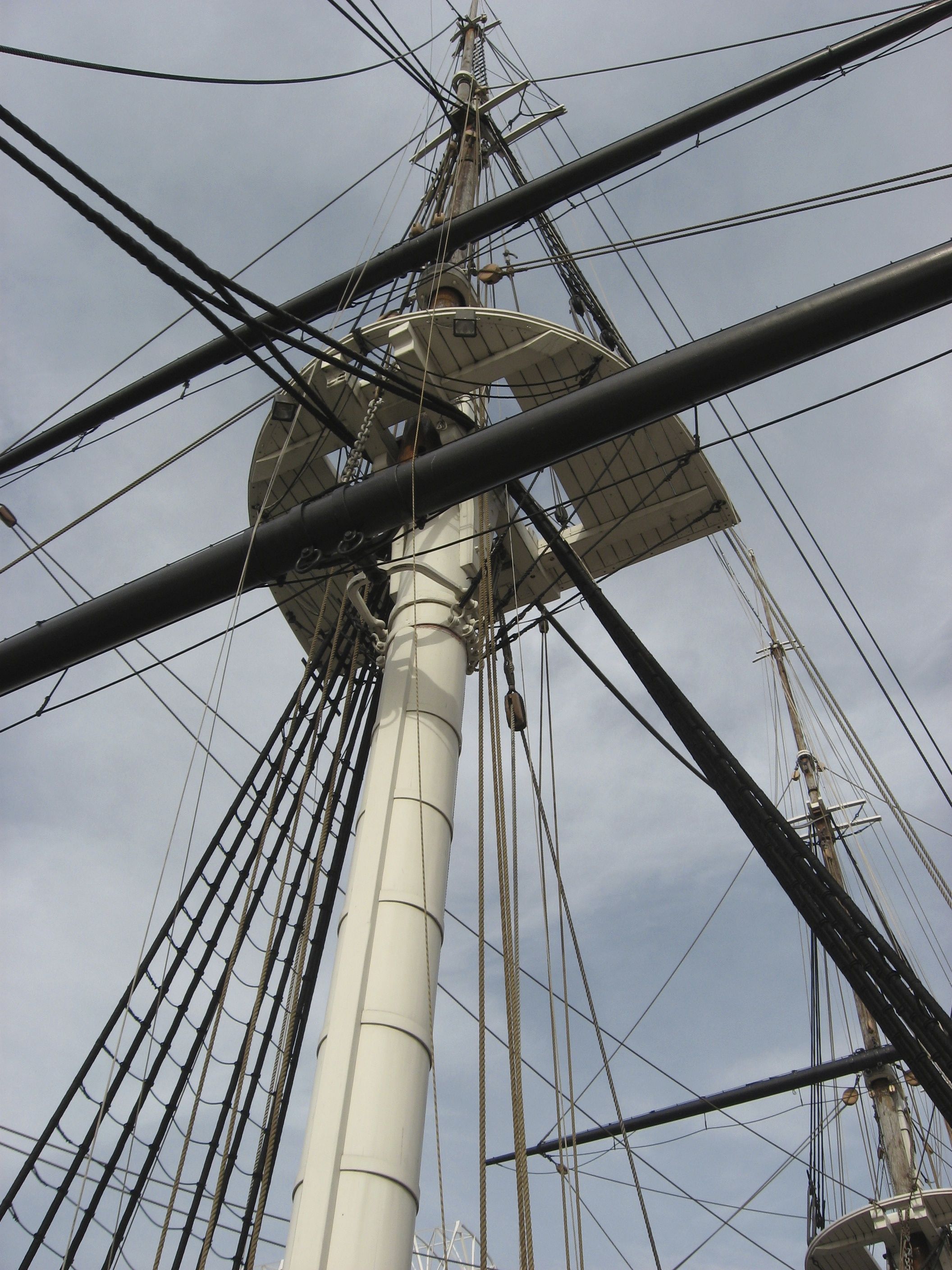
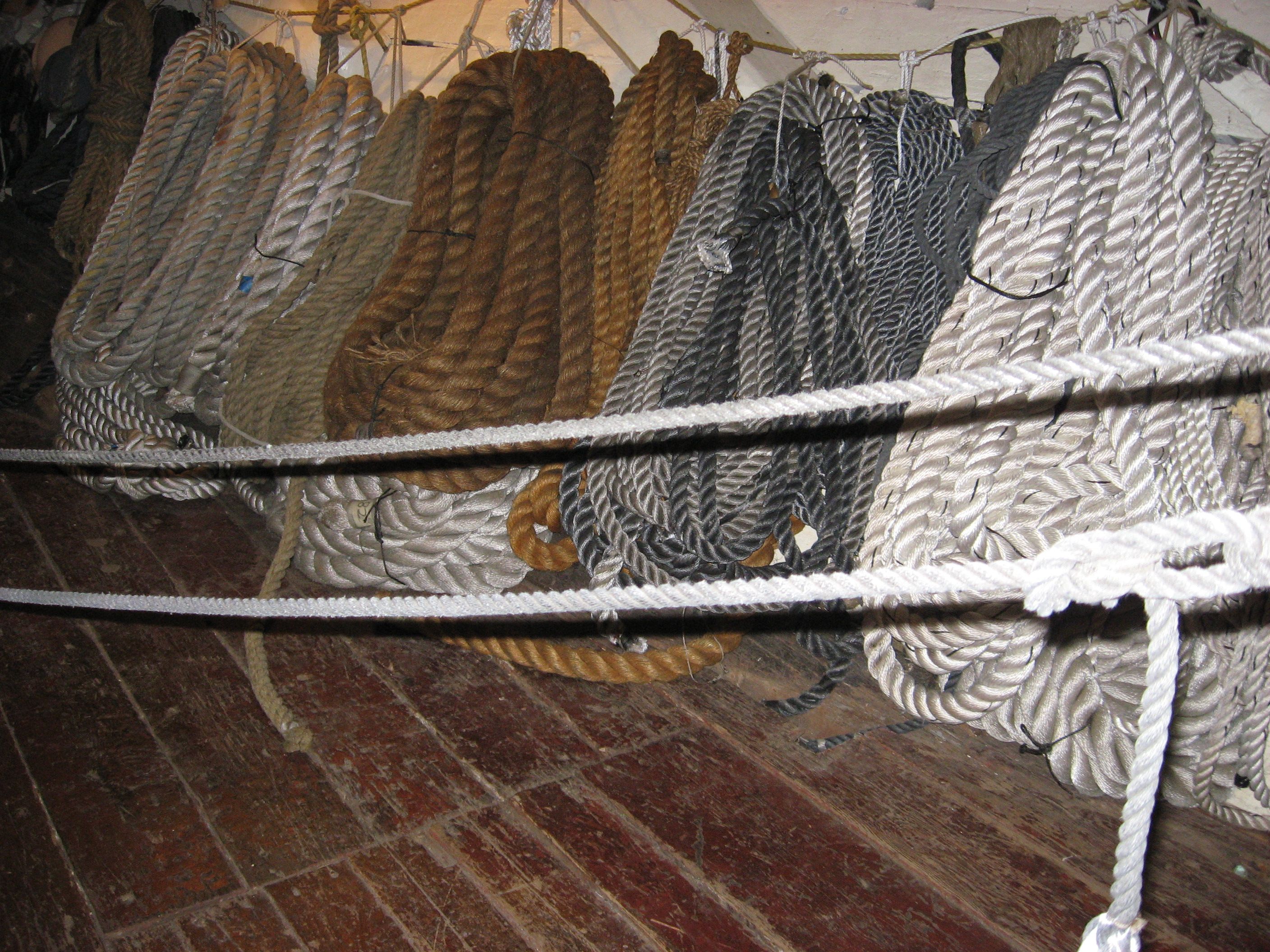
These are just a few photographs of the USS Constellation, which I took when I was on my research trip to Baltimore two years ago. It was built after the time period of my novel, but I still found the tour of the ship helpful. Clicking on each image will make it larger.

constellation

rigging

ship's wheel

cable tier

9 Comments

Filed under Research

Betsy Bonaparte: Her Venomous Tongue

According to people who knew her, Betsy Bonaparte had a quick wit and a sharp tongue. One of the amusing aspects of portraying her in the novel was allowing her to rebuke her foes with stinging insults that I would never dream of using myself.

One acquaintance who wrote about her was James Gallatin, son of Albert Gallatin — who was the Secretary of the Treasury and later the Minister to France. When Betsy was in Paris, she dined with the Gallatins often. In his memoirs, James Gallatin recorded the following story. I wasn’t able to use it in the novel, so I will quote it here:

[Madame de Staël] had given a dinner at her house in Geneva, to which Madame Bonaparte was invited. Arriving very late, she delayed serving the dinner for over half an hour. On one side of her was a Mr. Dundas, a great gourmand, who was much put out at having to wait. After the soup had been served he turned to Madame Bonaparte and asked her if she had read the book of Captain Basil Hall on America. She replied in the affirmative. “Well, madame, did you notice that Hall said all Americans are vulgarians?”

“Quite true,” calmly answered Madame Bonaparte, “I am not in the least surprised. If the Americans had been the descendants of the Indians or the Esquimaux there might have been some reason to be astonished, but as they are the direct descendants of the English it is perfectly natural that they should be vulgarians.” After this Mr. Dundas did not open his mouth again and left at the first opportunity.

The Diary of James Gallatin

4 Comments

Filed under Extra Tidbits

Betsy Bonaparte: More than a Pretty Face

Betsy&Dorcas

Dorcas Spear Patterson and her daughter Elizabeth by Robert Edge Pine, c. 1786, Maryland Historical Society, Photograph by Ruth Hull Chatlien, 2011

As a young girl, Betsy Patterson loved to read, and she enjoyed showing off her quick mind. One book she savored was the Maxims of the Duke de La Rochefoucauld—a collection of more than 500 sayings. La Rochefoucauld was a French aristocrat who had lived during the 1600s. His maxims were insightful, cynical, pragmatic, and sometimes scornful. It seems an odd choice of literature for a young girl, yet something in it spoke to Betsy. By the time she was ten, she had diligently memorized each saying. As I was writing the novel, I had fun having her recall maxims that were appropriate to what was happening in her life during various periods. To give you a sample of La Rochefoucauld’s outlook, some of the maxims I didn’t quote in the book are listed below:

We are never so happy or so unhappy as we suppose.

Great names degrade instead of elevating those who know not how to sustain them.

We always like those who admire us, we do not always like those whom we admire.

We may bestow advice, but we cannot inspire the conduct.

In a time when many children memorized psalms, this was the view of the world that shaped young Betsy’s consciousness. One of the many things that made this woman distinctive.

6 Comments

Filed under Extra Tidbits

Betsy’s Circle: Joshua Barney

Joshua-barney-circa-1800
Sketch of Joshua Barney, c. 1800, Wikimedia Commons

As I mentioned yesterday, the man Jerome visited in Baltimore was Joshua Barney, a naval officer. Barney was born in Baltimore in 1759, and he served in the U.S. navy during the American Revolution. During that war, he was taken prisoner several times and then exchanged for British officers. In 1779, he was captured again and imprisoned in England. He escaped in 1781, and the next year, as commander of the ship Hyder Ally, he captured the much more heavily armed HMS General Monk.

After the American Revolution, he served in the French navy for a while, which is probably how he met the Bonapartes. Barney returned to the United States in 1800. During the War of 1812, he served first as a privateer and then rejoined the U.S. navy as a captain.

In June 1814, Barney’s flotilla encountered a British fleet in Chesapeake Bay. The British pursued the U.S. vessels, which retreated up the Patuxent River and then up St. Leonard’s Creek, which was too shallow for the British frigates. The British blockaded the mouth of the creek so the Americans could not escape. Rather than allow the British to capture his flotilla, Barney scuttled the ships.

Two months later, he took part in the defense of Washington and was severely wounded, taking a ball in his thigh—which could never be removed and which troubled him the rest of his life. He died in 1818 of complications from that old wound. He was only 59.

Leave a comment

Filed under Extra Tidbits

Writing Historical Fiction: Back Story

Jérôme Bonaparte - Sophie Lienard
Jerome Bonaparte by Sophie Lienard, on Wikimedia Commons

What brought Napoleon Bonaparte’s brother Jerome to Baltimore of all places? Well, for one thing, Baltimore was the third largest U.S. city in the early 1800s, behind New York and Philadelphia. It was one of the country’s most important ports.

Second, a year or so earlier, Napoleon had decided that his baby brother was going to become the naval expert of the family. Accordingly, Jerome was made a lieutenant (even though he was technically too young) and sent to the West Indies. While there, he made a colossal error of judgment that might have had serious international repercussions, so his commanding officer ordered him to return home to report to his brother, who at the time was First Consul of the French Republic.

Britain and France were technically at peace during 1803, but relations between the two countries remained uneasy. French officials were understandably nervous about exposing a member of Napoleon’s family to possible danger should war break out again while he was en route. They decided Jerome should go to a U.S. port and sail on a neutral ship—and thus, hopefully, escape the notice of the British navy.

So Jerome went to Baltimore, where his friend Joshua Barney lived. Being a young man who loved amusement and pretty girls, Jerome decided to enjoy himself while he was there. He soon began to hear about a beautiful young woman named Betsy Patterson, known as the Belle of Baltimore, and grew eager to meet her. From all accounts, Jerome had a way with young women, but he never took any of his amours seriously. I’m guessing he thought he could have a fling and then be on his way with little consequence to himself. However, Betsy proved to be more than a match for the charming young Corsican. When they met, he was instantly smitten. As the saying goes, the thunderbolt struck, and any interest Jerome had in returning home disappeared.

2 Comments

Filed under Writing Historical Fiction

Book Review: Dialogues of a Crime

I wasn’t sure what to expect when I cracked open the cover of Dialogues of a Crime by John K. Manos. I knew it was a crime story, but it didn’t seem like the typical murder mystery / detective novel. It’s not. It’s an interesting confection blended of almost equal parts Godfather, police procedural, and film noir with a Chicago twist.

The book opens with a snapshot of a brutal crime in progress. Then the narrative switches to the story of college student Michael Pollitz being caught up in a drug sweep in 1972. Michael, who comes from a blue-collar family, quickly learns that the justice system is radically different for those who have money than it is for him. He tries to do the right thing, but what happens to him is anything but fair.

Fast forward to 1994. A lifelong criminal facing serious time tries to buy leniency by saying he has information about a couple of cold cases—killings that occurred 21 and 22 years earlier. Detective Larry Klinger doesn’t exactly trust the guy, but the information is intriguing enough to make him open an investigation that leads him straight to Michael Pollitz. Is the former student now turned advertising executive cool enough to hide the fact that he’s a murderer? Or is he covering up for an old friend—mob boss Dom Calabria, who’s the father of his grade school buddy?

The story is a page turner; I read it straight through in two days. Yet it touches on interesting issues of justice, guilt, and loyalty. Given the current controversies over the privatization of prisons and the consequences of strict guidelines for sentencing drug-related crimes, this novel has contemporary relevance. Anyone who likes mysteries and crime novels will enjoy reading Dialogues of a Crime.

1 Comment

Filed under Book Reviews

Betsy’s Circle: The Man Who Saved Baltimore Twice

General Samuel Smith Rembrandt Peale
General Samuel Smith by Rembrandt Peale [Public domain], via Wikimedia Commons

The person in charge of the defense of Baltimore when the British attacked in 1814 was Samuel Smith, former revolutionary officer and current U.S. senator. He also happened to be Betsy Bonaparte’s uncle, as he was married to her mother’s older sister.

Samuel Smith was born in Pennsylvania, but his family moved to Baltimore when he was a boy, and he made Baltimore his home for the rest of his life. Like Betsy’s father, he made his money from shipping and trade. Smith served in the army during the Revolutionary War, advancing from captain to major to lieutenant colonel. He spent the winter at Valley Forge with George Washington, and he later took part in the Battles of Saratoga, which were the turning point of the war.

In his forties, Smith entered politics. He served in the House of Representatives from 1793 to 1803 and in the Senate from 1803 to 1815. His highest rank was president pro tempore of the Senate, making him third in line to the presidency.

During the War of 1812, a Baltimore officer named General William Winder had been in charge of the disastrous defense of Washington, D.C., which led to a rout of the American forces and the burning of the capital. When it came to defending their own city, Baltimoreans turned to 62-year-old Samuel Smith rather than the much-younger Winder. Smith organized the digging of fortifications to prevent a land approach and prepared to sink ships in the Patapsco River to prevent a water approach.

After the Battle of Baltimore was over, Smith returned to Congress, serving in both the Senate and the House for nearly two more decades. All together he spent 40 years in Congress.

In August 1835, Smith was once again called upon to save his city. Seventeen months earlier, the Bank of Maryland had failed, and the public had grown tired of waiting for the long-promised settlement. For several nights running, angry people gathered to attack the homes of bank directors. Samuel Smith, now eighty-three years old, organized a force of volunteers and managed to quiet the mob and convince them to disperse. The grateful city made Smith mayor, a position he held for three years. He died in 1839 at the age of 86.

Leave a comment

Filed under Extra Tidbits

Book Review: The Shadow of the Wind

I just finished reading the remarkable Spanish novel The Shadow of the Wind by Carlos Ruiz Zafón (translated by Lucia Graves). This book is part historical fiction, part crime thriller, part gothic mystery.

In a Barcelona still trying to recover from the Spanish Civil War, ten-year-old Daniel is distressed because he can no longer remember his deceased mother’s face. His father, a bookseller, seeks to console him by initiating him into the existence of a secret place: the Cemetery of Forgotten Books. There, Daniel is allowed to choose one volume to be his own; he will become that book’s guardian for the rest of his life. Daniel chooses, seemingly at random, The Shadow of the Wind by Julián Carax. Upon reading the book, he falls in love with it and decides to look for other books by the author.

That’s when things get complicated. Daniel soon discovers that a mysterious, dark figure has been on a mission to destroy all of Carax’s works—and that he himself may be in danger for possessing what could be the last copy in existence.Several years pass, and as he nears manhood, Daniel takes it upon himself to unravel the mystery of what happened to Carax and his writings. With the help of an unlikely partner, Daniel uncovers a Byzantine, tragic story that combines forbidden love, family secrets, heartbreaking loss, and cruel betrayal. Hot on Daniel’s heels is a sadistic government official who wants to get his hands on Carax if he is still alive. And complicating matters, strange things begin to happen that make it seem as though Daniel is reliving some of the significant events of Julián Carax’s life.

In many ways, this novel is a love letter to books and reading, and I enjoyed it thoroughly. It was one of those rare stories that I hated to put down and hated to see end. I recommend it strongly.

2 Comments

Filed under Book Reviews

The Star Spangled Banner

Ft. Mchenry 2

As I mentioned yesterday, the last few days have been the 199th anniversary of the British attack on Baltimore during the War of 1812. Most people today don’t realize just how important that war was. At the time it took place, many people referred to it as the Second War of Independence because they realized that our young nation’s very survival was at stake.

How fitting then that this was the occasion of the writing of our national anthem.

To understand what happened, it helps to know a little bit of geography. Baltimore is a harbor, but it does not lie directly on the Atlantic coast. Rather, it was built on the Patapsco River, an estuary leading off Chesapeake Bay. The city is located on the Northwest Branch, upstream from Fort McHenry. In practical terms, the British fleet could not reach the inner harbor of Baltimore without first taking the fort. So British ships gathered in the river below McHenry and began to bombard it.

While all this was going on, an American lawyer named Francis Scott Key was on one of the British warships. A month earlier, after the British burned Washington, DC., they captured a friend of Key’s named Dr. William Beanes. President Madison had given Key permission to negotiate with the British for the release of Beanes, and Key just happened to arrive right before the attack. Once the battle started, he had to remain aboard the ship—which gave him a front row view of the battle.

Like the people in Baltimore, however, Key really didn’t have much information about how the attack was going. All he could do was to make inferences from what he saw before him. As long as the British kept firing mortars and rockets at the fort, he could assume it hadn’t surrendered. This went on from early in the morning of the 13th all through the night.

Then by the dawn’s early light, Key and the people in Baltimore saw that the U.S. flag still waved. This was no ordinary flag. Major George Armistead, commander of the fort, had commissioned a huge 42′ x 30′ flag from Baltimore seamstress Mary Pickersgill. He wanted “a flag so large that the British would have no difficulty seeing it from a distance.” That defiant banner gave proof to anyone who cared to look that Fort McHenry remained in American hands even after 24 hours of shelling.

Not long after sunrise, the British fleet gave up and sailed away. Key wrote a poem about his experience, and that poem eventually became our national anthem.

Leave a comment

Filed under Extra Tidbits