Category Archives: Book Reviews

Sunday Review: Book Woman of Troublesome Creek

Kim Michele Richardson’s The Book Woman of Troublesome Creek is a beautiful example of a historical novel that sheds light on a little-known aspect of American history. Frankly, I wish publishers would look for more stories like this instead of endlessly bringing out books about the world wars.

This story focuses on two aspects of Kentucky’s history: first, the pack horse librarians who at some danger to themselves carried books and magazines into some of the poorer regions of the Kentucky hills and, second, the blue people of Kentucky, whose unusual color was caused by a recessive genetic condition and which caused them to be discriminated against in much the same way Black citizens were.

Richardson herself is a native of Kentucky, and she conveys an especially strong sense of the place and culture. Cussy Mary is a likable narrator, spunky without being overly modern. Through Cussy’s father, the story also highlights the hardships of Kentucky coal miners.

The book has a satisfying but not too saccharine ending and an epilogue that explains more about the historical background. I enjoyed the novel very much.

Leave a comment

Filed under Book Reviews, fiction

Sunday Review: Stalin’s Door by John St. Clair

Stalin’s Door by John St. Clair is the story of a family nearly destroyed by Stalin’s Great Terror, the purge by which the dictator imprisoned or executed not only his enemies but also anyone who, in his growing paranoia, he thought might become enemies. Zhenya, the daughter of the family, is the single thread running through the tale. Her father was a rising official awarded an apartment in the House on The Embankment in Moscow, a place where the Soviet elite lived in luxury that was unimaginable to most citizens. However, life there came with the terrible price of greater scrutiny by the secret police. Historically, a very high proportion of residents were dragged off, charged with treason, tortured, and killed or imprisoned. The author has created an almost surreally Kafkaesque scenario to explain why so many residents were disappeared—to borrow a term from Argentina’s dirty war. (I did search to see if the method of spying St. Clair describes was real but without success.) The novel follows Zhenya through the arrest of her parents and down the unexpected path she takes to and through the horrific Gulag system.

This project was an ambitious undertaking for a debut novel, and to a large extent, St. Clair pulls it off. The horrors inflicted by Stalin’s regime are vividly portrayed without gratuitous descriptions of brutality. The five main characters caught up in the story are sympathetic and distinctive. The themes of the novel remind me of The Lives of Others, the brilliant 2006 German film about the Stasi. There is also a touch of magical realism used effectively to enhance the story rather than distract from it.

I have two minor quibbles. I was hoping for an author’s note to explain what was real and what was fictional invention. If St. Clair ever issues a second edition, I think he should consider adding one. The second quibble is that the language was a bit stilted for my personal taste. I suspect this was intentional to evoke both the past and the foreignness of Russian culture. I’d have preferred a lighter hand with that technique, but it wasn’t enough of an issue to slow my reading.

Leave a comment

Filed under Book Reviews

Sunday Review: The Fourteenth of September by Rita Dragonette

According to family lore, one of my older brothers had the wrong date on his birth certificate. The nuns wrote down the next date instead and refused to believe my mother when she pointed it out. Whether that story is true or not, I have long been intrigued by the idea that someone’s chances of dying in Vietnam might have been determined by a clerical error.

I kept remembering that as I listened to this novel. It doesn’t deal with such a mistake, but it does examine how the draft lottery was an arbitrary gamble that the government played with people’s lives. The book focuses on Judy Talton, a college sophomore in 1969 whose mother pressured her into enlisting in the army in exchange for college tuition and a nursing degree. But after her first year in the program, Judy begins to have qualms about the Vietnam War, so she embarks on a careful plan to determine exactly what she believes. Since only one other student on campus knows about her military commitment, she decides to “go undercover” and join a group of freaks (AKA hippies) who oppose the war and are increasingly vocal about it.

Judy quest to resolve her crisis of conscience is complicated by conflicts among various student groups, an attraction to one of the freak leaders, a friendship with a young man who shares the same birth date as hers (causing her to identify with his anxiety over the lottery), a trip to Washington to participate in the largest protest the government had ever seen (at least until then), the mounting tensions over the pending first draft lottery, the explosive news of the Kent State shootings, and the constant fear that either the army or her new friends will discover the double life she is leading.

I enjoyed the book. I’m 8-10 years younger than that generation, so I wasn’t very aware of the explosive events of 1969 at the time, and it was enlightening to live it through Judy’s perspective. There were times I felt that I wanted more descriptions of setting; the book was inside Judy’s head a lot of the time, and I could have done with more concrete details.

Leave a comment

Filed under Book Reviews, fiction

Sunday Review: You Belong Here Now

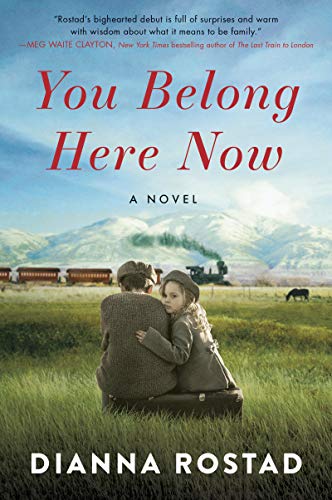
Set in Montana in 1925, You Belong Here Now by Dianna Rostad is a beautiful story of relationships that bring healing. The “you” in the title refers to three young people who are sent from New York City on one of the orphan trains transporting children out west to be taken in by families and set to work on farms. Each of the three has been battered by life: Charles, a strapping young man who learned to get by on the violent streets after his father died in WWI and his mother took to the bottle; Patrick, an Irish immigrant orphaned by the Spanish flu epidemic; and Opal, a tiny, mostly silent, little girl taken from an abusive mother. In town after town, these three are picked over and rejected until they’re the only ones left. On their way to the last town on the line, they take desperate action and jump off the train rather than be sent back to New York.

Fate leads them to the Stewarts, a ranch family that is in many ways as scarred as they are. Nara, the unmarried daughter in her 30s, is a capable ranch hand and wants nothing so much as to be Papa’s righthand helper and heir—but he refuses to accept that the family’s only son has left permanently for the life of an artist in New York. And Mama, caretaker of everyone else, still nurses a deep wound inflicted by the death of her oldest daughter as a small child. Although the Stewarts desperately need help around the place, Nara doesn’t trust the children because of rumors about crimes committed by other train riders. Mama takes Opal under her wing, but Nara works the boys hard so they will be too tired to get into mischief. But trouble finds them anyway in the form of prejudice by the community, Children’s Aid Society officials looking for the runaways, and dangerous ghosts from the children’s past lives.

Rostad delivers the setting masterly, evoking the language, scenery, and customs of rural Montana with a deft touch. The story is heartwarming without being saccharine. None of the difficulties are glossed over, and each character’s growth is hard won. I recommend this debut novel highly.

Leave a comment

Filed under Book Reviews

Sunday Review: Fast Girls by Elise Hooper

Reading this novel during the 2021 summer Olympics added a new layer of insight for me. The furor over Simone Biles’s decision to step away from certain events for the sake of her mental health made me realize that the pressures suffered by Black runner Louise Stokes in 1932 and 1936 haven’t really eased. Although Black female athletes today don’t have to overcome as many obstacles just to compete, they still face more scrutiny and harsher judgment than their male and white counterparts. Louise’s story was very poignant.

The other two athletes who are prominently featured—Betty Robinson and Helen Stephens—each have amazing stories too. Betty was an Olympian in 1928—the first ever gold medalist in the women’s 100m event—but suffered a devastating injury she had to overcome to race again. Helen had personal obstacles to overcome, including an obstructive father. And all three of the athletes and their families were affected by the economic devastation of the Great Depression.

Elise Hooper has done us all a great service by shining a light on the early history of women’s track and field. Plus, it’s an engaging novel, well told and perfectly paced—just like a well-run race.

Leave a comment

Filed under Book Reviews

Sunday Review: Klara and the Sun

It’s interesting to see the world through the eyes of a robot who has to infer so much about the behavior of the human family with which she lives. I found Klara a surprisingly endearing character (more so than most of the humans). Part of her relationship with the sun is obvious, but the deeper part is mysterious and unexplained. At a broader level, I thought the novel had a lot to say about throw-away culture—how this future society (and our own) view humans and technology as disposable because it’s just too much trouble to to find useful roles for those we have “outgrown.” This is a thought provoking book but not a comfortable one.

2 Comments

Filed under Book Reviews

Sunday Book Review: Women of the Chateau Lafayette

Stephanie Dray has outdone herself this time. Often when I read multiple timeline books, I have a favorite that I can’t wait to get back to, but with this novel, I was invested in all three stories. The three main characters are each compelling in very different ways. And the time periods! The French Revolution, World War I, and World War II—each full of drama and human tragedy. Highly recommended. https://smile.amazon.com/The-Women-of-Chateau-Lafayette/dp/0593335937/ref=tmm_pap_swatch_0?_encoding=UTF8&qid=1627819414&sr=8-1

Leave a comment

Filed under Book Reviews

Sunday Book Review: A Thousand Ships

This is a fascinating patchwork of chapters recounting the stories of the women named in the epics and myths about the war. It’s not purely chronological. Occasionally, the author flashes back to give an important back story. For instance, Iphigenia came fairly late in the story as did the story of the golden apple disputed by the three goddesses. Some of the stories are very painful, while others show resilience. I love that the women are finally getting their due. https://www.amazon.com/Thousand…/dp/1509836195/ref=nodl_

2 Comments

Filed under Book Reviews, Uncategorized

Sunday Review: The Children’s Blizzard by Melanie Benjamin

FIVE STARS

This novel is based on true historical events that I knew about from working on history textbooks, so I was anxious to read it. Unlike her other books, Benjamin writes about mostly fictional characters in this one. The story is gripping and horrifying. Think about “To Build a Fire” on a vast scale. Honestly, this is my favorite novel of those that I’ve read by this author.

Leave a comment

Filed under Book Reviews, Uncategorized

What I’ve Been Reading: In the Shadow of Lakecrest

32945388

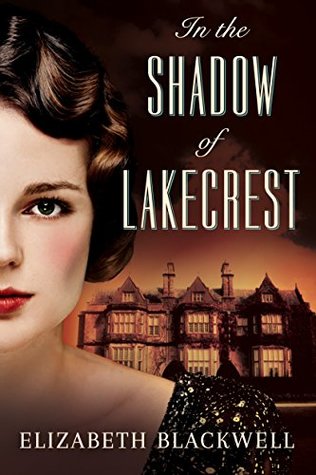
In the Shadow of Lakecrest by Elizabeth Blackwell is a lively story in the gothic style that I mostly enjoyed. Kate Moore meets handsome, wealthy, kind Matthew Lemont on a transatlantic crossing and is thrilled when he wants to continue their relationship after they dock in New York. On a whim, she travels with him in his private train car to Chicago, where they wed after a short courtship. This should be the answer to Kate’s prayers, who was determined to marry well to escape her violent and poverty-stricken past—a past that she is careful to hide from Matthew.
When Matthew takes Kate to his family’s estate—a crumbling hodgepodge of a mansion on Lake Michigan, cobbled together from odds and ends Matthew’s grandfather imported from Europe—Kate begins to realize that the Lemonts have their own dark secrets. What happened to the aunt, who disappeared one night after holding a strange ceremony in the labyrinth built on the grounds? And why does Matthew’s twin sister seem so jealous of Kate?
The story is a page turner that is hard to put down. I have mixed feelings about the ending though; I wish there had been more hints that the person who takes the final action of the novel had the potential to do such a thing.

Leave a comment

Filed under Book Reviews, Uncategorized