Tag Archives: Twentieth century

Sunday Review: The Jøssing Affair by J..L. Oakley

If you enjoy reading WWII historical novels but are looking for a setting other than England or France, I have a recommendation for you! One arena of the war that has been overlooked far too long is occupied Norway. The Jøssing Affair by J. L. Oakley is an excellent contribution toward filling that gap. Germany invaded Norway in April 1940 and gained control of the country within two months. They remained in power until the capitulation of all German forces on May 8, 1945.

As did the residents of other occupied countries, many Norwegians took part in the underground resistance against the Nazis—in spite of horrifying reprisals. These resistance fighters adopted the name of Jøssing, and this novel tells their story by focusing on a fictional fighter named Tora Haugland. Associated with the “Shetland Bus,” which secretly transported arms and people between Norway and Britain, Haugland goes undercover pretending to be a deaf-mute working on a fishing boat and living in a tiny coastal village.

His work places him in constant danger, and the precariousness of his situation increases when he reluctantly falls in love with “the woman”—Anna Fromme, the German widow of an old friend, whom all the villagers ostracize because they believe she betrayed her Jøssing husband to the enemy. Anna is innocent but has other secrets that put her and her young daughter at risk.

Haugland’s network is under constant pressure from Norwegian collaborators who are helping the Gestapo hunt down resistance fighters. The most dangerous of these is Henry Oliver Rinnan, a real-life figure—and sadist—who led a group of informants and personally participated in the torture and murder of many captured Norwegians.

The novel is set during the latter part of the war and dramatically shows the harsh conditions under which Norwegians lived and their excruciating wait for an Allied victory and Norwegian liberation. The characters are well drawn (particularly Haugland and Anna), and the plot has plenty of action and suspense. An added bonus is the many descriptions of Norway and the fascinating tidbits about Norwegian culture and everyday life.

I recommend this book without reservation, and I look forward to reading the two other volumes in Oakley’s series on Norway’s experiences during and after the war.

Leave a comment

Filed under Book Reviews, fiction, Historical fiction, Twentieth century, World War II

Sunday Review: The Wildes by Louis Bayard

A friend I respect recommended this novel to me, so I bought it without knowing anything more than that it had something to do with Oscar Wilde and his family. I’m ashamed to admit that, despite being a literature major in college, I had no idea that Wilde had a wife and two sons (perhaps because I was educated at a very conservative college that would NEVER dream of teaching this particular writer).

As is appropriate for a novel about a playwright, this story is told in five acts. The first act recounts, from the point of view of Wilde’s wife Constance, a seemingly idyllic summer holiday in the country. Idyllic, that is, until Constance gradually realizes that the relationship between Oscar and one of their guests—Lord Alfred Douglas, son of the Marquess of Queensberry (the man who came up with the rules of boxing)—is more distressingly intimate than she’d suspected.

A brief entr’acte summarizes the scandal that ensued after Queensberry, offended by what he viewed as the corruption of his son, accused Wilde of sodomy. Wilde sued him for defamatory libel, but Queensberry was able to produce evidence that the charge was true. Wilde was convicted of gross indecency for homosexual acts and sentenced to two years hard labor. The punishment destroyed his health, and he died a few years later.

The remainder of the novel examines the effect of the scandal on his family. Act two focuses on Constance’s time in Italy, where she fled under an assumed name (Holland) to protect her boys from the scandal. She was suffering a debilitating illness that was poorly understood at the time and also died too young. Act three focuses on the eldest son, Cyril Holland, and his time as a sniper in World War I, a military assignment that led to his death. In this telling, he is determined to maintain a gruff, “manly” demeanor to differentiate himself from his father. Act four focuses on the younger son Vyvyan Holland in later life and a confrontation with the man whose relationship with Oscar Wilde destroyed the family. The fifth act is speculative, so I won’t describe it except to say that it moved me deeply.

I enjoyed the innovative structure and the opportunity to learn about this aspect of Oscar Wilde’s life. He was an original thinker and an astute observer of society, and I can only wonder what literary gems we lost because he was persecuted to an early death. I recommend the novel to lovers of historical fiction, English literature, and LGBTQ+ issues.

1 Comment

Filed under 19th century life, Book Reviews, England, fiction, Historical fiction, LGBTQ+, Twentieth century, World War I

Sunday Review: Precipice by Robert Harris

I’ve read and enjoyed many historical novels by Robert Harris. This one, although based on a fascinating premise, did not quite live up to what I’ve come to expect from this author.

When the novel opens in July 1914, UK Prime Minister H.H. Asquith is involved in an affair with socialite Venetia Stanley, member of a wealthy aristocratic family. Stanley is 35 years younger than Asquith; at the beginning of the novel, she is 26 and he is 61. They see each other on social occasions, they walk on Hampstead Heath, he takes her on drives in the curtained back seat of his Rolls Royce, and they send each other passionate letters.

Asquith had long had a penchant for the company of attractive young women, but one thing that makes his relationship with Stanley different from the others is the extent to which he relies on her intelligence and uses her as a sounding board and sometime political advisor. The other difference, of course, is that World War I breaks out in August 1914, a conflict of such complexity and carnage that Asquith faces unprecedented political challenges. As a result, he often writes Stanley three letters a day, discusses confidential cabinet discussions, and even sends her the originals of top secret communiqués.

The novel covers the relatively short time of a single year, but a lot happens. This includes a tragic accident among Stanley’s social set, the tense events leading to the outbreak of war, the planning for the ultimately disastrous Gallipoli campaign, an insider’s look into political infighting among British cabinet members, and an investigation launched by Scotland Yard into who’s responsible for top secret telegrams being found discarded across southern England.

The characters are well developed, and I particularly liked the main female character, a clever, insightful woman bored with her shallow social scene and searching for something more meaningful in her life.

What eventually cast a slight pall of my enjoyment of the book was Asquith himself. His love for Venetia Stanley was obsessive, self-indulgent, and reckless, and his letters to her (quoted from the originals) became tedious and whiny. As a result, I was not sorry for the book to end.

Despite that, I still rate the novel a four-star read. If you can get the audiobook book, give it a listen. The incomparable Samuel West is the narrator.

Leave a comment

Filed under Book Reviews, England, fiction, Historical fiction, Novels about women, Twentieth century, World War I

Sunday Review: The Paris Bookseller by Kerry Maher

This historical novel tells the story of Sylvia Beach, founder and owner of the famous Shakespeare and Company English-language bookstore in Paris. Although this is a single-timeline novel, there are a couple of important threads to the story: Beach’s love affair with the French bookstore owner Adrienne Monnier and her interactions with the writers and artists who flocked to Paris in the 1920s, most importantly James Joyce.

Beach knew Joyce at the time he was writing his masterpiece Ulysses. Excerpts had been published in literary journals, and Joyce’s frank depictions of bodily functions and human sexuality caused American officials to deem it pornography, making it a crime to sell or even send through the U.S. mails. Beach believed strongly in Joyce’s art, so she decided to publish the novel in Paris, even though she had never published anything before.

As portrayed in the novel, the relationship between Beach and Joyce is tremendously complicated. Joyce is grateful, in his own way, but he also has the kind of entitled personality that just accepts the things that other people do for him. One of the interesting questions of the story is this: does Joyce take advantage of Beach, or does Beach fail to stand up for herself? Or is their relationship an unhealthy combination in which both are true?

Other prominent literary figures wander through the pages, among them Ernest Hemingway, F. Scott Fitzgerald, and Gertrude Stein. Beach was more than just a bookstore owner; she promoted the groundbreaking literature of the time, and many people felt that she played a pivotal role in nurturing their careers.

Beach’s relationship with Monnier is beautifully depicted. The two women have a deep and abiding love, but as they live through legal hassles, economic hard times, and World War II, the stressors they experience affect them in different ways, and they begin to grow apart. I never lost my sympathy for either of them even when I wanted their choices to be different.

This is an excellent novel for lovers of Paris and of American letters.

Leave a comment

Filed under Book Reviews, France, Historical fiction, Paris, Twentieth century

Sunday Review: And by Fire by Evie Hawtrey

Evie Hawtrey’s debut And by Fire crackles with as much energy as a well-tended blaze, one that Hawtrey maintains control of from start to finish. 

There are two related storylines in this novel. In 1666, Margaret Dove, lady-in-waiting to the queen of England, wishes she dared pursue a forbidden life, becoming a female scientist and casting off her noble heritage to marry the man she loves, King Charles II’s fireworks maker. When the Great Fire of London breaks out, the two lovers survive but lose track of a friend in the freak explosion that ruins St. Paul’s during the conflagration. What they discover when they seek to find out if their friend is alive or dead casts a possible shadow over the reputation of one of the most prominent men of the age.

In the present day, DI Nigella Parker specializes in cases involving fire. When a serial arsonist begins to set fires in London, hoping to win fame for himself and for a historical figure he believes was overlooked, she and her partner DI Colm O’Leary must brush aside any awkwardness from a past relationship and find the firebug before his crimes escalate. 

The book is fast-paced but with enough character development to make the protagonists seem fully human. Highly recommended.

Leave a comment

Filed under Book Reviews, Crime, Historical fiction, Twentieth century

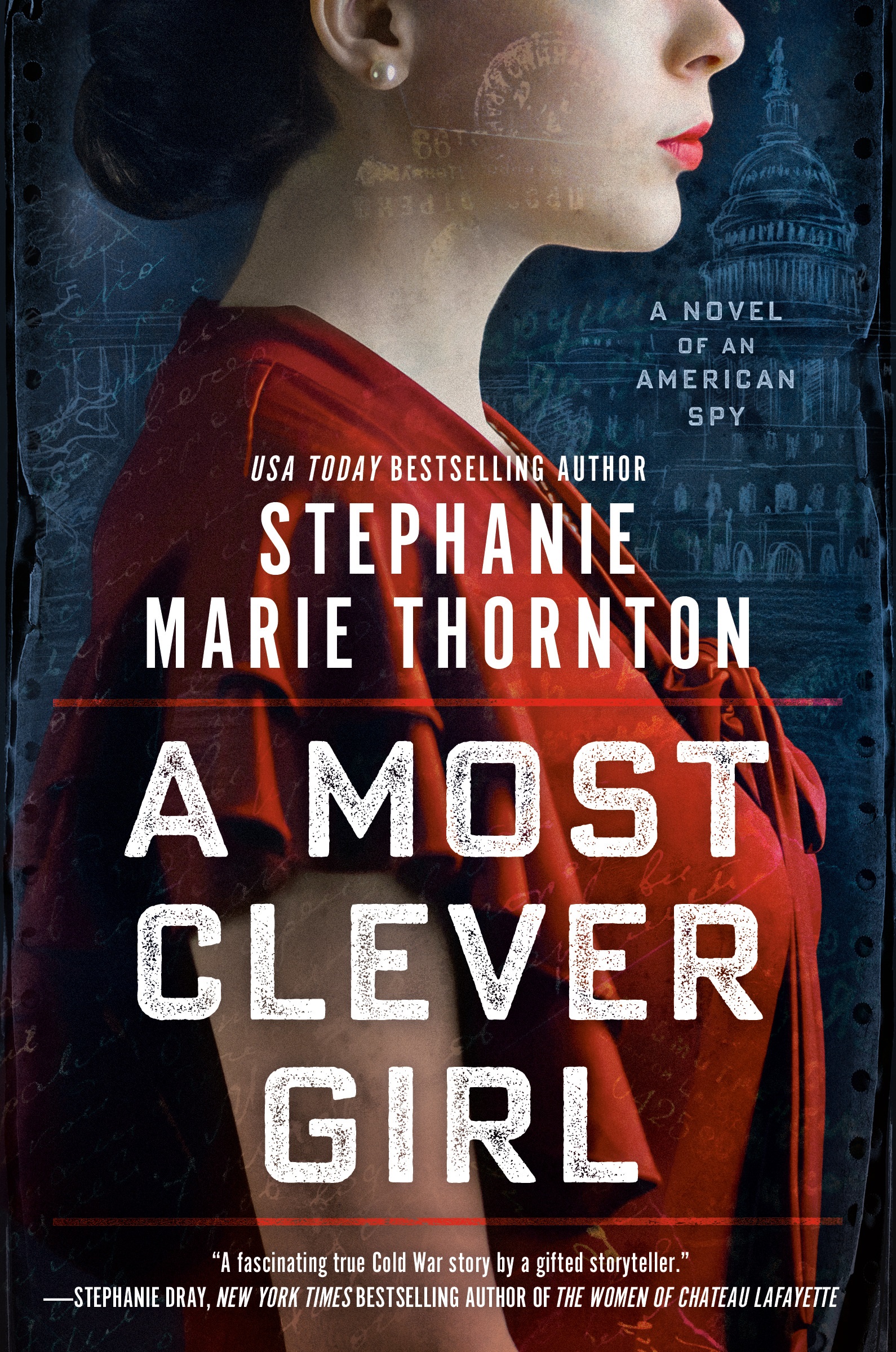
Sunday Review: A Most Clever Girl by Stephanie Marie Thornton

This historical novel is based on the life of Elizabeth Bentley, an American who was recruited into the American Communist Party by friends. Soon thereafter, Bentley discovers a valuable role she can play for the party, a role that she believes will also help her country. Bentley falls in love with her handler, Jacob Golos, and together they form the largest foreign spy ring in the United States. All through World War II, she tells herself that she is not a traitor to her country because the Soviet Union is a U.S. ally so to help one is to help the other.

Things become much more perilous after the war when the United States and Soviet Union enter the period of hostility known as the Cold War. Events test Elizabeth’s loyalties until eventually she must irrevocably choose sides.

Bentley’s life is fascinating, and she certainly played a pivotal role in the mid-twentieth-century history. However, my enthusiasm for the novel was blunted a bit by its format. It is told as a dialogue between Elizabeth and a young woman who is searching for answers about her biological mother, whom she believes was one of Elizabeth’s associates. I think the story would have been more vivid if it hadn’t been spun in this retrospective way.

Despite that quibble, I recommend A Most Clever Girl to anyone interested in the era of Red scares, McCarthyism, and the Cold War.

Leave a comment

Filed under American history, Book Reviews, Historical fiction, Twentieth century

Bringing Home the WWII Dead

After the end of World War II, the first shipment of the remains of U.S. military dead arrived in the United States in October 1947. Congress had authorized the U.S. Army to spend $200 million bringing back the dead of all the armed forces as well as civilian federal employees. As I mentioned last week, families had the option of having their loved ones buried in cemeteries overseas, which is also where those remains that could not be identified were buried (except for one that was returned to be buried in the tomb of the Unknown Soldier in Arlington). The majority of families, however, wanted their loved ones brought home.

The army stationed people at military terminals located in two U.S. ports—Oakland, California, and Brooklyn, New York—to coordinate the unloading of the ships and the routing of remains by rail to fifteen distribution centers across the country. The army used its own fleet of mortuary cars, converted primarily from wartime hospital cars.

The military made every effort to treat the fallen with dignity. The remains of soldiers, sailors, and marines were not listed or handled as cargo; they were considered passengers. Military guards, who were recruited from regular troops, accompanied every train.

Once the remains reached the intended distribution center, they either went by hearse to the final location, if it was close enough, or on a passenger train, following the same procedures that railroads used for normal shipments of human remains.

Each of the dead had a military escort, who would be from the same service branch and of the same rank, sex, and race as the deceased. These escorts were not the same personnel as the troops who worked as train guards. The escorts were the only members of the military to interact personally with the loved ones of the fallen, so they went through five weeks of training on what to expect, how to answer questions, and what emotional and psychological reactions they might encounter. Some of their duties included:

  • Making sure no caskets were lost
  • Ensuring that railroad personnel handled the caskets with dignity
  • Verifying locations and identities
  • Seeing that the caskets were draped with flags whenever they were in public view
  • Carrying a new flag for the funeral, blank ammunition rounds for graveside salutes, and reimbursement forms for the funeral expenses

By the time the army had finished repatriating all of the World War II dead, remains of personnel fallen during the Korean War had begun to arrive in Oakland, thus extending the program a few more years.

Source: Murrie, James I. and Naomi Jeffery Petersen. (February 2018). Last Train Home. History Net. Accessed November 17, 2021 from https://www.historynet.com/last-train-home.htm

Leave a comment

Filed under American history, Historical fiction, Research