The Glass Maker by Tracy Chevalier is an unusual blend of historical fiction and magical realism. It tells the story of a glassmaking family on the island of Murano near Venice over the course of centuries. But unlike, say, a James Michener generational saga, this is the story of one generation that lives on and on as the world off the island experiences time in the usual way. In particular, the novel focuses on Orsola, a woman who has to fight to become an accomplished glass maker in a profession dominated by men.
I believe Chevalier chose this method of storytelling to emphasize that Murano has a timeless quality and that the craft of glassmaking there has changed very little over the centuries. The concept intrigued me, and I did enjoy the descriptions of the glassmaking process contained in the novel—so much so that I’m seriously lusting after a necklace of Murano glass beads.
Ultimately, however, I couldn’t sustain the willing suspension of disbelief to totally buy into this plot device. Part of the problem, I think, is that when you stretch one human life over the course of centuries, their character development arc slows down too much, and the reader gets a little bored with them. At least, that was true for me. I rated the novel as four stars when I finished it three weeks ago, and that still feels right to me. The Glass Maker is an enjoyable story told in an intriguing way, but not one of the best of the year.
I recently read two historical novels about women who achieved great fame during the mid-twentieth century. Both books are based on research but are essentially fictional retellings of the historical personages’ life.
The first was Maria by Michelle Moran, a novel about Maria Von Trapp. Moran attempts to debunk some of the misconceptions about the characters of Maria and the captain and also to reveal a more accurate story about the family and their escape from Austria. The story is framed by Maria’s attempt to have inaccuracies in the musical The Sound of Music changed before its premiere, but anyone who knows show business will know that she’s waited too long. Opening is just a couple of weeks away. To appease her, Oscar Hammerstein sends his assistant Frances (a fictional character) to listen to Maria’s concerns and take notes—notes that almost everyone but Maria realizes will never be used.
Moran knows how to tell a well-paced story with engaging characters. I enjoyed learning about what was true and untrue in the beloved musical, as well as finding out more about what happened to the Trapp family afterward. Another unexpected subplot concerned the decline of Hammerstein’s health: The Sound of Music was his last show; he died very shortly afterward. I recommend the book to anyone who’s loved the musical and wants to know more.
The second novel was Can’t We Be Friends? by a team of authors: Denny S. Bryce and Eliza Knight. Also based on research, it’s an imagined account of the extraordinary friendship between jazz singer Ella Fitzgerald and actor Marilyn Monroe. The novel alternates between the perspectives of the two main characters.
I was surprised to learn how much the two women had in common and how very supportive of each other they were during their separate struggles with an entertainment industry that wants to control women as commodities. As anyone who’s paid attention to Taylor Swift knows, this is an ongoing struggle today.
Because Fitzgerald and Monroe’s friendship was largely private, I think these authors had to invent more of the novel’s events than did Moran in Maria. For example, they had to decide how to portray Monroe’s marriages to Joe DiMaggio and Arthur Miller, both of which have been subjects of vastly differing interpretations. Having it told by two authors made each character’s voice distinct, and the novel engaged me and gave me a deeper understanding of both women. I particularly found it an extremely emotional experience to read about Monroe’s tragic downward spiral in the last years of her life. I recommend this novel to people interested in the back story of famous icons of pop culture, especially women who tried to fight the patriarchal system.
First, a personal word. I haven’t posted here in a long time because of a combination of work stress followed by a traumatic family loss. I’m going to do my best to start posting regularly again, beginning with resurrecting my Sunday reviews.
I have been a Louise Penny fan since the beginning of the Armand Gamache series. In the last few years, however, I’ve begun to approach Penny’s books with a pinch of dread. Will this be one I love? Or will she return to the type of plot line I’ve grown weary of?
I think it’s very difficult to be a writer of mysteries, particularly if you set your novels in a small town or village. Would anyone in their right mind want to live in the same village as Miss Marple? That’s like asking to be murdered. Eventually, the series of terrible crimes in such a contained location begins to seem absurd. At which point, the author has to embrace the whimsy (Midsomer Murders, anyone?) or find an alternate story line.
The early Gamache novels centered on Three Pines, a charming fictional village that time forgot, home to a set of wonderfully lovable and eccentric characters. Eventually, however, Gamache was promoted to too high a position for it to be believable that he would investigate killings in such a relatively unimportant place. That’s when the books began to feature the “Gamache uncovers a massive conspiracy” plot lines. And that’s when I began to find the books increasingly less enjoyable.
I still read them because I love Gamache, his family, and circle of friends. Some of the conspiracy novels have managed to engage me almost as much as the village cozy novels. Alas, The Grey Wolf, the latest installment, was not one of them.
Very little of the story was set in Three Pines. I miss Clara, with paint in her hair; Gabri and Olivier, the odd couple who run the bistro; wise Myrna Landers who owns the bookstore; and cantankerous poet Ruth with the pet duck who swears. And I’m weary of widespread sinister plots that threaten Quebec.
The other problem with The Grey Wolf is that it is so convoluted. Gamache and his second-in-command Jean-Guy Beauvoir return to the isolated monastery that was the setting for The Beautiful Mystery and then travel to one of the remotest points of Quebec, while Isabelle LaCoste (Gamache’s other second-in-command—illogical but just accept it) travels to the fortress monastery of Grand Chartreuse in France. Despite the slight problem that neither lay people nor women are allowed within its walls. The Sureté detectives are searching desperately for clues to stop a terrible crime of domestic terrorism from happening, even though they aren’t sure at first exactly what the crime will be.
The plot is difficult to follow—I got so confused that I stopped in the middle to reread The Beautiful Mystery, which wasn’t much help so I don’t recommend following my example. And the story drags. For only the second time, I gave a Louise Penny novel only three stars.
The last time I did that was for book 16. The next two were 5-star reads for me. The Grey Wolf was book 19.
I really hope Penny can find a way to balance the sweeping plots she seems drawn to now with the loving closeups of eccentric humanity that made many of us fall in love with her books. I’ll read her next book before deciding if I want to continue. There are too many other books to continue a series I no longer enjoy simply out of loyalty.
I really didn’t know what to expect when I started The Great Believers, but now I think it’s the best book I’ve read so far this year.
It’s a duel timeline novel. One story, set from 1985 to 1990, chronicles the tragic losses that occur when the AIDS epidemic reaches Chicago and begins to spread among the LGBTQ committee there—among the first generation to really experience the exuberance of living fully out and celebrating gay pride. The point of view character for this timeline is Yale Tishman, a thoughtful, quiet man who is trying to build a world-class gallery at Northwestern University and is in a relationship with Charlie Keen, who publishers a newspaper focused on LGBTQ issues. Early in this narrative, one of their best friends—Nico Marcus—dies of AIDS, forcing them all to face what is happening and make hard choices (or not, depending on the person). Yale remains close with Nico’s younger sister Fiona, who becomes a fierce advocate for all of Nico’s friends, especially those who find themselves navigating the isolating journey that is AIDS.
The second timeline features Fiona in 2015. She’s a divorced women, suffering from PTSD because of all the losses she endured in the 1980s, running a charity thrift store whose proceeds go toward AIDS work, and struggling with guilt because she’s estranged from her daughter, Claire, who not only rejected Fiona but also disappeared into a cult. Someone sends Fiona a video of a young woman in Paris who might be Claire, so Fiona takes off to that city to try to track her down. While there, she stays with a gay photographer friend she’s known since the 1980s, a man who is about to open a major exhibition that will feature some of the images from the past.
The book is warm, evocative, devastating, beautiful, and heartbreaking. Each character is so vividly drawn. I loved both Yale and Fiona, and I felt so deeply for their situations. Even though the author is much younger than the people she’s writing about, this all felt very authentic to me. Because I lived in Chicago during the 1980s and worked with people who did some AIDS awareness projects at our company, I could remember a bit of what that period was like, although my experience of it was definitely far removed from what the characters of this book went through. This novel made me wish I’d forced myself to know more, care more, and do more about the crisis.
I honestly want to run around telling everyone I know to read this novel. It affected me that deeply.
This is a novel about taking stock of one’s life—and perhaps finding the courage to jettison our defense mechanisms. Esmé, a writer in her sixties, is experiencing a prolonged creative paralysis. Instead of working on a new novel, she’s put off dealing with her writer’s block by continuing to give public readings of her last published work. Then one night someone from her past shows up in the audience, and the unexpected encounter propels her into reviewing both the childhood loss that scarred her and her first year of college, which she views as the worst year of her life. The two events have combined to turn her into a defensive person who deliberately avoids both memory and commitment.
Her voyage of reminiscence occurs at the same time that she faces an upheaval to her current life as major as her long-ago enrollment at a strange university in an alien part of the country. Her lover, Gino, has asked her to live with him, a move that will force her to leave the carefully constructed routine and cocoon that have surrounded and cushioned her for decades. Esmé makes the physical move, but can she risk the psychological and emotional shifts that will be necessary to commit herself to Gino? Or will she once again retreat?
Esmé is a sharply drawn character who makes mordant observants about the world and records her experiences in memorable detail—in sentences such as this one about a childhood visit to Pittsburgh: “The Sound of Music on a screen so immense that I felt pressed back in my seat by a barrage of pictures and sounds—I had nightmares about the Baroness’ nostrils and the way the peals of thunder rattled inside of my chest.”
The COVID-19 pandemic makes its appearance, but instead of dominating the narrative, it works on Esmé as it did on so many of us—as a catalyst toward reevaluating our lives. I found myself rooting for Esmé the entire novel, and the ending felt satisfying without being too tidy or forced.
The publication date for The Reading is September 27, but the Kindle version is available for preorder on Amazon, and the paperback can be preordered at Amika Press.
I enjoyed the first novel in this series, so I was glad when I learned that Jane Steen had written a sequel. When I found out that part of the story dealt with Victorian artists, I was even happier. I especially enjoy novels that touch on the lives of painters. Sir Geraint’s subject matter is interesting, and I found it easy to visualize his paintings from Steen’s descriptions.
In some ways, this is closer to a historical cozy than a hard-boiled murder mystery, but the novel doesn’t veer too far in that direction. It’s doesn’t dwell on the cute, quaint, eccentric features of the setting that so many cozies do. Instead, it’s as concerned with the intertwined relationships in the Scott-DeQuincy family as the crimes that disrupt their lives. Lady Helena is a very likable character—the overlooked baby of an aristocratic family, forced by the death of her beloved husband to develop a stronger backbone and more independent spirit than she might have otherwise.
Odelia is Helena’s much older and favored sister, who spends most of her time in London working as an artist. The secret referred to in the title puts enormous strain on the sisters’ relationship and forces Helena to make choices about her values even as she tries discover who is stalking her sister with malicious intent.
I’d be remiss not to mention that Fortier, the intelligent and attractive French doctor, is back, and Helena learns a bit more about the problem marriage that has made their growing attraction an impossibility. I’m sure that readers will meet him again in future installments.
I recommend this book without reservation as well as its prequel.
I bought this audiobook because a) it was on sale, b) the setting looked interesting, c) I’m a lifelong knitter, and d) I wanted something light but not TOO light. Most of those expectations were fulfilled.
However, before buying, I looked it up on Amazon and saw that it was listed aa #2 of series, so even though I prefer to read mysteries series in order, I thought dipping in this early wouldn’t be too bad, and if I liked it, I could go back and catch up on the opening installment without too much confusion.
Except the label on Amazon is deceptive. This isn’t book 2 of 5. it’s book 12 of I don’t know how many—16 maybe? Apparently, the author switched publishers after 11 books, and the publisher decided to restart the numbering. Why would they do that? It’s very confusing to readers, and one of the most basic rules of marketing is not to confuse or annoy your customers.
Anyway, the whole time I was reading it, I was having difficulty remembering the characters who seemed to be the recurring cast. I’d get bits of their personalities here and there—but not enough to stick. It was like transferring to a new high school halfway through junior year and not only being unable to break into the in group but also finding it impossible to glean enough information to understand the relationships swirling around you.
The mystery was fine, although I easily spotted the essential piece of information that was tossed out casually about halfway through the book. But I just couldn’t engage enough with the knitting group to want to spend time with this town or these characters further, certainly not enough to go back and wade through 12 books to reach this point and move forward.
I feel like I’m being unnecessarily negative and I’m punishing the author for something the publisher did, but I don’t like being led to expect something that isn’t what I’m getting. Perhaps if Kindle or one of the audiobook vendors I use offers a really cheap version of the real book 1 in the series, I’ll give it another try, or maybe I’ll eventually see if my library carries the books. But not until I’ve had a chance to let the irritation settle and see whether I develop any curiosity about the characters.
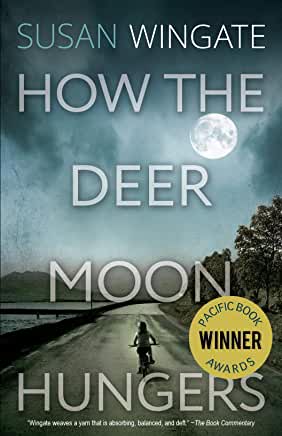
The novel opens with a throat-grabbing scene narrated by the spirit of seven-year-old Tessa, who floats above a team of paramedics who are frantically trying to save her life as they transport her to an emergency room after an accident. Then the story jumps back in time several days.
Tessa and her sixteen-year-old sister Mackenzie, live on an island in the Pacific Northwest with their mother Uma, who is stressed out, overwhelmed, and raging since her husband left the family. Mackenzie—Mac—just wants to be a teenage girl, hanging out with her best friend Gemma, rolling her eyes at the things grownups do, and maybe, if she works up enough nerve, giving in to her friend’s urging to try marijuana. But because Uma is too overwhelmed to handle her current life, Mac also has to spend more time than she’d like looking after Tessa. The two sisters adore each other, but having a seven-year-old tag along can really cramp a teenager’s style.
Then the unthinkable happens. On a day when Mac and Gemma planned to do “big kid” things, they have to take Tessa with them. During a few minutes of inattention on the older girls’ part, the local drunk runs over Tessa and her bike with his massive tank of a car.
Tessa dies, and Uma blames her older daughter. So do the police, who decide—based on some dubious eyewitness testimony—to arrest Mac on drug charges. The only people who can vouch for Mac’s innocence choose self-protection rather than honesty, and Mac finds herself being sent to juvenile detention, where her already shattered life turns into a nightmare of terror and abuse.
Fortunately, Susan Wingate doesn’t leave us there but rather takes us through the worst of it and into the early stages of Mac’s road to redemption and healing. I recommend this to anyone who wants to be reminded of the possibility of hope after deep despair.
This novel is an enjoyable blend of Southern family saga meets magical realism. Anna Kate is a young woman on the verge of starting medical school, less because she wants to than because she promised her late mother Eden that she would take up the career her father never got to practice. A few months before med school is about to start, Anna Kate’s maternal grandmother Zee dies, leaving Anna Kate an estate with a catch.
Zee practiced folk medicine and ran the Blackbird Cafe in Wicklow, Alabama—a town that Eden left behind when her boyfriend was killed in an accident because his parents unjustly accused her of crashing the car on purpose in an attempted murder-suicide. Because of her mother’s painful feelings about the town, Anna Kate has never been there. Now Zee’s will has left the cafe to Anna Kate with the stipulation that she must run it for two months before she can inherit the property and sell it.
It doesn’t take Anna Kate long after arriving in Wicklow to learn that the Blackbird is no ordinary cafe. The pies sold there are said to have magical powers to bring those who are grieving messages from beyond the grave. Except that when Anna Kate bakes the pies, the messages don’t come. “The pies are broken.”
A whimsical yet poignant tale ensues that encompasses solving family mysteries, establishing bonds with estranged relatives, weighing the value of old promises, and possibly finding love. The novel is comforting and thought provoking at the same time. But be forewarned. It will give you a craving for pie, blackberry iced tea, and buttermilk fried chicken.
I was first drawn to this historical novel because it’s about an artist. As it turns out, the subject of painting plays less of a role in the story than I’d hoped, but I still enjoyed it thoroughly.
Ida Russell has been battered by life’s storms. Before the story opens, every member of her family of origin has died from drowning: her father and two brothers by accident, her mother by suicide. Before these tragedies, Ida was a promising painter and art student in Boston. However, lonely and weighed down by grief, she decides after an all-too-brief courtship to marry Ezra Pease, a sheep farmer from Martha’s Vineyard.
After the marriage, Ida discovers to her chagrin that Ezra is a lazy farmer, an unkind husband who alternates between inattention and disparagement, and a habitual gambler who takes part in nightly poker games in town. The charm he displayed during their courtship has vanished, along with her family property, which he sold as soon as he had the legal right as her husband to do so. The running of the household and many of the duties of the farm fall to Ida, leaving her no time to paint. Two years into their marriage, Ezra and Ida are barely on speaking terms.
Ezra and a friend named Mose open a salvage company, and the work occasionally takes them away from home—absences that Ida relishes—but that business doesn’t prosper any more than the farm does. Shortly after the novel begins, Ezra and Mose leave for a salvage job in Rhode Island. While they are away, a terrible storm hits, and their company boat catches fire and sinks. A ship named the Portland traveling to Rhode Island also sinks with great loss of life. A few days afterward, Ida is stunned to receive a letter from Ezra written just before he and Mose were about to board the ill-fated vessel. Although their bodies never wash ashore, they are presumed dead because only a small portion of those lost in the Portland are ever recovered. Although Ida retains little love for her husband, losing another person to drowning feels like an unnecessarily cruel trick of fate.
As Ida sets to work trying to make sense of her husband’s assets, she encounters Mose’s brother, Henry Barstow, a man she’s met before and liked. They team up to settle the estate and see if anything remains for either of them to inherit. Ida’s financial situation is dire. Ezra’s lies and deceptions—and the destruction of the salvage boat—have left her with nothing to live on but the grudging support of her husband’s aunt. Complicating matters, Ida finds herself more and more attracted to Henry, who is married but also in a foundering relationship.
Ida makes many discoveries through the course of the story—about her husband, about secret schemes, and about the island residents it takes her so long to come to know. Most importantly, she learns to rely on herself and to feel confidence in her own opinions rather than society’s dictates.
Readers’ Favorite Gives The Ambitious Madame Bonaparte the Gold Medal!
Welcome!
You have reached the author website of Ruth Hull Chatlien, author of The Ambitious Madame Bonaparte, based on the true story of Betsy Bonaparte, and Blood Moon: A Captive’s Tale, based on the tale of Sarah Wakefield, taken captive during an Indian war.
How to Purchase My Book
The Ambitious Madame Bonaparte and Blood Moon: A Captive’s Tale may be ordered at Amika Press or Amazon.
Books
The Ambitious Madame Bonaparte Blood Moon: A Captive's Tale
Synopses and Excerpts here




 Ruth Hull Chatlien