Category Archives: Twentieth century

Sunday Review: The Next Ship Home by Heather Webb

The Next Ship Home is an enlightening and enjoyable novel about Ellis Island at the very beginning of the 20th century. The two protagonists seem, at first glance, to have little in common. Alma comes from a German family that is well established in New York. Her mother and stepfather run a popular beer hall in a largely German area, but the family is saving to move to a better neighborhood. However, Alma’s life is not as rosy as it might at first seem. She is plain and studious, and she has neither managed to marry nor attract potential suitors. Her stepfather resents her for being a “financial burden” on him, so he arranges for her to work as a matron on Ellis Island.

There, Alma joins an overworked and often resentful staff—and she finds troubling evidence that immigrants are not being treated with the respect, kindness, and helpfulness they deserve. Early in her employment, she befriends two Italian sisters, Francesca and Maria, who are fleeing an intolerable situation in Sicily. In her insular German-American community, Alma has been taught that Italians—and Sicilians in particular—are criminals who are little better than animals. Her growing friendship with Francesca, who wants only to get a job so she can build a new life, forces her to rethink those prejudices.

At the time the novel is set, 1902, the press and the government were trying to uncover abusive and fraudulent practices taking place at the famous port of entry for so many immigrants. Alma and Francesca get caught in the middle of the explosive situation and must make a difficult choice between ignoring the wrongdoing or confronting it at the risk of their own wellbeing. Francesca in particular faces potentially disastrous consequences; the novel’s title names the very threat that hangs over her head if she angers the wrong people.

The characters are well-drawn, the plot never lags, and the background about Ellis Island is interesting and appalling in equal measure. Highly recommended.

Leave a comment

Filed under American history, Book Reviews, Historical fiction, Twentieth century

Don’t Assume!

Korean War Veterans Memorial in Washington, D.C.

Today’s lesson in being a historical novelist is “Don’t assume anything.”

In my novel-in-progress, I have a character whose older brother has to serve in the Korean War. And because my character is going to talk about what’s going on to his girlfriend (my main character), he (and therefore I) have to know the facts. Because sure as shooting (excuse the pun), if I have one of the following details wrong, someone somewhere is going to shred the book in a review or in an incensed email to me.

– When did young men have to register for the draft? I assumed 18. In this, I was correct.

– When did young men have to go for their preinduction physical to be assigned their draft status? At first, I assumed 18. In this, I was wrong. Initially for Korea, it was 19. Later, they lowered it to 18-1/2 because they needed more men. Tommy (my guy) was still in the 19-year-old time period.

– How long was basic training? At first, I assumed it was the same as during WWII. Wrong. Someone in the government got the brilliant idea to shorten it, just train recruits in “camp life” stateside, and let the officers in Korea train the recruits in combat conditions … while they were undergoing combat. It didn’t work out so well (I wonder why), so they revamped the program for Vietnam. (This applies only to U.S. troops, not the rest of the countries making up the UN forces in Korea. The Brits, for one, had more sense.)

– Where would someone recruited from Illinois do his basic training? Silly me, I thought it was obvious that someone from Illinois would go to Fort Leonard Wood in neighboring Missouri. But remember today’s lesson. Don’t assume. So today I spent more than two hours trying to answer this question definitively. There are lots of written and recorded histories by Korean War vets on the Internet. The trick was finding one that would tell me a) where the soldier was from and b) where he did his basic training. I finally found a site that allowed me to sort by state (Illinois) and by topic (basic training). And I found five relevant video interviews. Turns out that each one of the KW vets was trained at a different place: Camp Breckinridge, KY; Fort Leonard Wood, MO; Fort Bliss, TX; Fort Bragg, NC; and Fort Bennington, GA.

Fortunately for me (or I’d still be searching), one of the interviews was with a man who was the right age (give or take a couple of months), who was drafted just a couple of months after my guy, and most importantly, served in a division of the 8th U.S. Army that actually fought in the battle where I need my guy to be. Which means Tommy gets to be shipped down to El Paso, TX, for training. Yay.

Also fortunately for me, I’ve already discovered how long troop ships took to sail from San Francisco to Korea: two to three weeks. Putting everything together, I now know that poor Tommy will be in Korea fighting in time to be captured during the Battle of the Soyang River.

That’s the other lesson about historical novelists. We have no heart when it comes to our characters’ fates. Especially the minor ones.

2 Comments

Filed under American history, Historical fiction, Research, Twentieth century, Writing Historical Fiction

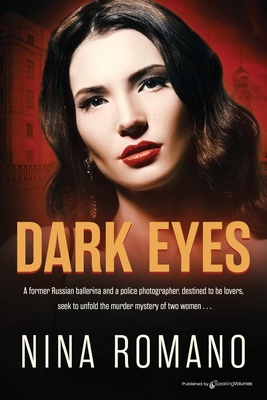
Sunday Review: Dark Eyes by Nina Romano

In the Soviet Union of 1956, former ballerina Anya, who can no longer dance because of an injury, struggles to make a life for herself and her disabled daughter Iskra. She is aided in this by the child’s grandmother Calina—until a brutal crime occurs. During the ensuing police investigation, Anya meets and is powerfully attracted to a police photographer named Andrei, a man with his own dangerous secret. Together, the two discover a hidden world of greed, brutality, and corruption—a web of crime that threatens the new lovers and Anya’s child.

Dark Eyes teems with vivid characters and is rich with the customs, culture, and conditions of life in Khrushchev’s Soviet Union. Readers who are interested in Cold-War-era thrillers won’t want to miss this romance-adventure by the author of The Girl Who Loved Cayo Bradley.

Leave a comment

Filed under Book Reviews, Historical fiction, Twentieth century

Sunday Review: The Reading by Barbara Monier

This is a novel about taking stock of one’s life—and perhaps finding the courage to jettison our defense mechanisms. Esmé, a writer in her sixties, is experiencing a prolonged creative paralysis. Instead of working on a new novel, she’s put off dealing with her writer’s block by continuing to give public readings of her last published work. Then one night someone from her past shows up in the audience, and the unexpected encounter propels her into reviewing both the childhood loss that scarred her and her first year of college, which she views as the worst year of her life. The two events have combined to turn her into a defensive person who deliberately avoids both memory and commitment.

Her voyage of reminiscence occurs at the same time that she faces an upheaval to her current life as major as her long-ago enrollment at a strange university in an alien part of the country. Her lover, Gino, has asked her to live with him, a move that will force her to leave the carefully constructed routine and cocoon that have surrounded and cushioned her for decades. Esmé makes the physical move, but can she risk the psychological and emotional shifts that will be necessary to commit herself to Gino? Or will she once again retreat?

Esmé is a sharply drawn character who makes mordant observants about the world and records her experiences in memorable detail—in sentences such as this one about a childhood visit to Pittsburgh: “The Sound of Music on a screen so immense that I felt pressed back in my seat by a barrage of pictures and sounds—I had nightmares about the Baroness’ nostrils and the way the peals of thunder rattled inside of my chest.”

The COVID-19 pandemic makes its appearance, but instead of dominating the narrative, it works on Esmé as it did on so many of us—as a catalyst toward reevaluating our lives. I found myself rooting for Esmé the entire novel, and the ending felt satisfying without being too tidy or forced.

The publication date for The Reading is September 27, but the Kindle version is available for preorder on Amazon, and the paperback can be preordered at Amika Press.

Leave a comment

Filed under Book Reviews, contemporary fiction, Twentieth century

Sunday Review: Fiction about Argentina’s Dirty War

For those who don’t know the history of the Dirty War, I am going to begin with some background. (If you already know, skip to the fifth paragraph.) From 1974 to 1983, Argentina conducted a Dirty War that consisted of state terrorism against its citizens. The government hunted down political dissidents, leftist guerillas, socialists—and any students, intellectuals, and activists the junta feared might become threats. 

People were snatched from school, work, home, the street. They were tortured for information and for punishment. They were beaten, shot, and buried in mass graves. They were drugged and thrown from airplanes, still alive, over open water. Even today, they are known as los desaparecidos, the disappeared. Pregnant women who were taken were held until they gave birth and then disposed of; their children were given to government officials or military officers who wanted to adopt. 

An estimated 30,000 Argentinians were disappeared, and an estimated 500 babies were stolen. Many of the grieving families still have no answers. Many of the perpetrators of these crimes against humanity were pardoned. Not until the 2000s did the Argentine government revoke the amnesty laws and begin prosecution. 

Because of my work on world history textbooks, I’ve known about the Dirty War for decades, but not until recently did it occur to me to read fiction about it. 

In the last two weeks, I have listened to audiobooks of two of them: On a Night of a Thousand Stars by Andrea Yaryura Clark and Perla by Carolina de Robertis. 

Purely by accident, I chose books that have several plot points and themes in common. Both have main characters who are young women, born during the Dirty War and raised in families that are part of the Argentinian elite. Both Paloma and Perla begin knowing little about their country’s terrible past. Both find romantic partners who help them learn the shocking history their parents hid from them—and their families’ own roles in the Dirty War. 

And yet, the two books are also quite different. On a Night of a Thousand Stars is the more straightforward narrative. It’s a dual timeline novel. One story focuses on Valentina, a young woman who attends college and then begins working as an architect during the opening years of the government campaign of terror. The other story, set twenty years later, focuses on Paloma, a young woman who is raised by Argentinian expats in New York City. Because her knowledge of Argentina has been gleaned mostly from visits to her grandfather, she starts out understanding little about the Dirty War, but she makes some discoveries that motivate her to find out what if any role her father played in combatting the oppression. Paloma’s father, who was once Valentina’s lover, is the link between the two time periods. 

Perla, on the other hand, has elements of magical realism, which felt entirely appropriate for the South American setting. The main character is the daughter of a naval officer, which is a huge red flag to the knowledgeable reader that her family has dark secrets to hide. Perla’s lover, an investigative journalist, nudges her to question her parents, but she can’t—and her inner conflict causes her to break up with him. Then, while her parents are away, she is visited by a mysterious man, who smells of rotting debris on a beach and who constantly sheds water on the parlor floor. This uncanny intruder is the catalyst that helps Perla intuit her past. 

I enjoyed both novels. My personal favorite was Perla, which was more literary and, for me, better conveyed the tragedy of Argentina’s past. But for readers who don’t enjoy magical realism, I can recommend On a Night of a Thousand Stars without hesitation. 

Leave a comment

Filed under Book Reviews, contemporary fiction, Historical fiction, Twentieth century

Sunday Review: The Paris Bookseller by Kerry Maher

This historical novel tells the story of Sylvia Beach, founder and owner of the famous Shakespeare and Company English-language bookstore in Paris. Although this is a single-timeline novel, there are a couple of important threads to the story: Beach’s love affair with the French bookstore owner Adrienne Monnier and her interactions with the writers and artists who flocked to Paris in the 1920s, most importantly James Joyce.

Beach knew Joyce at the time he was writing his masterpiece Ulysses. Excerpts had been published in literary journals, and Joyce’s frank depictions of bodily functions and human sexuality caused American officials to deem it pornography, making it a crime to sell or even send through the U.S. mails. Beach believed strongly in Joyce’s art, so she decided to publish the novel in Paris, even though she had never published anything before.

As portrayed in the novel, the relationship between Beach and Joyce is tremendously complicated. Joyce is grateful, in his own way, but he also has the kind of entitled personality that just accepts the things that other people do for him. One of the interesting questions of the story is this: does Joyce take advantage of Beach, or does Beach fail to stand up for herself? Or is their relationship an unhealthy combination in which both are true?

Other prominent literary figures wander through the pages, among them Ernest Hemingway, F. Scott Fitzgerald, and Gertrude Stein. Beach was more than just a bookstore owner; she promoted the groundbreaking literature of the time, and many people felt that she played a pivotal role in nurturing their careers.

Beach’s relationship with Monnier is beautifully depicted. The two women have a deep and abiding love, but as they live through legal hassles, economic hard times, and World War II, the stressors they experience affect them in different ways, and they begin to grow apart. I never lost my sympathy for either of them even when I wanted their choices to be different.

This is an excellent novel for lovers of Paris and of American letters.

Leave a comment

Filed under Book Reviews, France, Historical fiction, Paris, Twentieth century

Sunday Review: The Diamond Eye by Kate Quinn

Kate Quinn’s latest novel is a World War II story with current relevance: it is about Mila Pavlichenko, a young woman from Kyiv, Ukraine, who gives up her quiet life as a mother, librarian, and grad student writing a dissertation on the history of Ukraine to help protect her homeland against brutal invaders. She becomes such a proficient sniper—with 309 official kills to her name and many more unrecorded—that she becomes a national hero known as Lady Death.

Mila is sent on a goodwill tour to the United States, where she develops an unlikely friendship with Eleanor Roosevelt (which really happened) and gets involved unwittingly in a plot to assassinate FDR (a fictional device with enough historical precedent to be plausible).

This is one of my favorite novels by Quinn. Instead of the multiple perspectives / time lines she has employed so often, this novel sticks with Mila throughout, and I thought the laser focus was well suited to a story about a sniper who had a legendary “diamond eye” with a rifle sight.

I also enjoyed the journey Mila takes from a frustrated, somewhat helpless young woman, unable to stand up against her domineering and thoughtless older husband, to a military officer who knows her abilities and is able to win the respect of the men under her command.

The detail about the sniper’s craft and the descriptions of the settings also serve to make this a riveting tale.

Leave a comment

Filed under Book Reviews, Historical fiction, Twentieth century, World War II

Sunday Review: And by Fire by Evie Hawtrey

Evie Hawtrey’s debut And by Fire crackles with as much energy as a well-tended blaze, one that Hawtrey maintains control of from start to finish. 

There are two related storylines in this novel. In 1666, Margaret Dove, lady-in-waiting to the queen of England, wishes she dared pursue a forbidden life, becoming a female scientist and casting off her noble heritage to marry the man she loves, King Charles II’s fireworks maker. When the Great Fire of London breaks out, the two lovers survive but lose track of a friend in the freak explosion that ruins St. Paul’s during the conflagration. What they discover when they seek to find out if their friend is alive or dead casts a possible shadow over the reputation of one of the most prominent men of the age.

In the present day, DI Nigella Parker specializes in cases involving fire. When a serial arsonist begins to set fires in London, hoping to win fame for himself and for a historical figure he believes was overlooked, she and her partner DI Colm O’Leary must brush aside any awkwardness from a past relationship and find the firebug before his crimes escalate. 

The book is fast-paced but with enough character development to make the protagonists seem fully human. Highly recommended.

Leave a comment

Filed under Book Reviews, Crime, Historical fiction, Twentieth century

Sunday Review: The Masterpiece by Fiona Davis

Fiona Davis specializes in writing historic fiction about well-known buildings in New York City, and I have loved several of her novels. This time she focuses on Grand Central Station. The Masterpiece is a dual-timeline story set in the late 1920s and the mid-1970s.

The 1920s timeline focuses on Clara Darden, a young artist from Arizona who came to New York to study at the Grand Central School of Art. (Did you know there was once an art school on one of the upper floors of Grand Central? I didn’t.) Now working there as an instructor, she has to fight against two kinds of bigotry—sexism and the ingrained belief that illustrators are less-talented and less-important than “serious painters.” She meets and becomes involved with two very different men: a wealthy young poet and a fiery experimental painter from Armenia. Little do any of them know that the high life of the 20s can’t last forever; the economy is heading for a crash that will turn the country upside down and make art a dispensable luxury in a grim new world of standing in soup lines and making do with frayed, years-old clothing.

The 1970s story focuses on Virginia Clay, a women who is recently divorced and struggling to support herself and her daughter. She fails to qualify for the secretarial job she interviews for and ends up working at the Grand Central information booth. By this time, the depot is dirty and neglected—no longer the beautifully decorated showplace it was in the 1920s—and it’s home to drug addicts and other unsavory types, causing passengers to spend as little time there as possible. The building is in danger of being torn down, with only the lower sections incorporated into amuch larger structure.

One day, Virginia happens upon the abandoned art school and discovers a long-forgotten painting that speaks to her deeply. It also reminds her of a painting she saw in a magazine: a piece of art by the painter using the pseudonym Clyde, which is about to go on auction for a fortune.

The art school is the obvious tie between the two storylines, but as Virginia works to both save Grand Central and uncover the truth about the painting she found, more links between the two stories emerge. I found this a very enjoyable read.

Leave a comment

Filed under American history, Book Reviews, Historical fiction, Twentieth century

Sunday Review: Paris Never Leaves You by Ellen Feldman

For the most part, I’m weary of all the historical novels set during the world wars, but once in a while, the premise of one will intrigue me enough to give it a chance. Paris Never Leaves You is such a novel. The story is told with the popular device of dual timelines—New York publishing during the 1950s and World War II in Paris—but it feels less disjointed than many such novels because one main character anchors both periods.

In the WWII storyline, Charlotte, a French war widow with a very young daughter, runs a bookstore with a friend during the German occupation of Paris. When the friend is arrested, Charlotte must survive on her own. She reluctantly forms a relationship with a German officer—a frequent bookshop customer—who can provide much-needed food for her child, but it is relationship riddled with danger for both of them.

During the later storyline, Charlotte is trying to live a low-key life in New York, doing her work as an editor and raising her teenage daughter Vivi. However, Charlotte faces an unexpected challenge when Vivi, who knows that in the last days of the war, she and her mother were imprisoned in a camp for French Jews, develops a sudden interest in exploring her Jewish heritage despite her mother’s agnosticism.

I’m reluctant to say more because the novel contains some surprise revelations—portrayals of survival strategies I haven’t seen in other novels set in this time period. Suffice it to say that it deals with the short-term and long-term costs of making moral compromises to stay alive.

For me, the book is a solid 4-star read. Not all of the relationships ring completely true to me, but they were plausible enough to keep reading and enjoy other aspects of the story.

Leave a comment

Filed under Book Reviews, Historical fiction, Twentieth century, World War II