Category Archives: Historical fiction

Sunday Review: Booth by Karen Joy Fowler

This is the first book of Fowler’s I’ve read, and I didn’t know what to expect. I checked it out of the library because learning more about the famous, or infamous, Booth family intrigued me.

For those who don’t know, John Wilkes Booth, the man who assassinated Lincoln, was a younger son of a famous family of 19th-century Anglo-American actors. Their father, Junius Brutus Booth, was highly acclaimed as was John’s older brother Edwin. Another brother, Junius Jr., was also an actor although not as highly regarded. I already knew from past research that during the Civil War Edwin actually saved the life of Abraham Lincoln’s oldest son, Robert—an event that can truly be described as stranger than fiction. So I wondered what other surprising things I might learn about the Booths.

The book is divided into sections offering the point of view of different members of the family, including sisters Rosalie and Asia and brother Edwin. In the author’s note at the end, Fowler tells us that although Rosalie existed, almost nothing is known about her—her existence in the surviving family records is summed up by the repeated epithet “poor Rose”—so that narrator is an almost entirely fictional creation. In Fowler’s hands, she is old-fashioned, less gifted than her creative siblings, unusually close to her mother, haunted by the memory of the many brothers and sisters who died young, and in constant pain from worsening scoliosis.

Asia is devoted to her family, particularly her brothers. To her, being a Booth is everything, so she plans to chronicle the careers of her thespian father and brothers. Yet, she is unconventional in her own way and provides an entirely different perspective on the Booth tribe than her much older sister does. Asia is the one who most represents what it is like to adore a relative who later commits a monstrous public crime.

Edwin is the Booth most haunted by the legacy of the family patriarch. As a boy, he was charged with accompanying his father on tour and trying (impossibly) to keep him from drinking. Edwin longs without much hope for Junius Sr. to acknowledge him as the heir best equipped to carry on the Booth acting legacy. These family obligations and his own personal failings oppress Edwin for years, along with a growing rift with John, who becomes increasingly radical as the war marches to its bloody end.

This then is the family that produces the assassin who became perhaps the most vilified American of the late 1800s. The book sustained my interest throughout; the shifting points of view provide sometimes contradictory opinions that help show what a tangle it can be to sort out what goes into the making of a killer.

My main complaint, however, is that the novel felt to me more like an intellectual exercise rather than an emotional journey. I remained largely unmoved even by the end of the story, and for that reason, I feel that the book falls short of the great novel it might have been.

Leave a comment

Filed under 19th century life, American history, Book Reviews, Historical fiction

Sunday Review: The Diamond Eye by Kate Quinn

Kate Quinn’s latest novel is a World War II story with current relevance: it is about Mila Pavlichenko, a young woman from Kyiv, Ukraine, who gives up her quiet life as a mother, librarian, and grad student writing a dissertation on the history of Ukraine to help protect her homeland against brutal invaders. She becomes such a proficient sniper—with 309 official kills to her name and many more unrecorded—that she becomes a national hero known as Lady Death.

Mila is sent on a goodwill tour to the United States, where she develops an unlikely friendship with Eleanor Roosevelt (which really happened) and gets involved unwittingly in a plot to assassinate FDR (a fictional device with enough historical precedent to be plausible).

This is one of my favorite novels by Quinn. Instead of the multiple perspectives / time lines she has employed so often, this novel sticks with Mila throughout, and I thought the laser focus was well suited to a story about a sniper who had a legendary “diamond eye” with a rifle sight.

I also enjoyed the journey Mila takes from a frustrated, somewhat helpless young woman, unable to stand up against her domineering and thoughtless older husband, to a military officer who knows her abilities and is able to win the respect of the men under her command.

The detail about the sniper’s craft and the descriptions of the settings also serve to make this a riveting tale.

Leave a comment

Filed under Book Reviews, Historical fiction, Twentieth century, World War II

Sunday Review: Lady Odelia’s Secret by Jane Steen

I enjoyed the first novel in this series, so I was glad when I learned that Jane Steen had written a sequel. When I found out that part of the story dealt with Victorian artists, I was even happier. I especially enjoy novels that touch on the lives of painters. Sir Geraint’s subject matter is interesting, and I found it easy to visualize his paintings from Steen’s descriptions. 

In some ways, this is closer to a historical cozy than a hard-boiled murder mystery, but the novel doesn’t veer too far in that direction. It’s doesn’t dwell on the cute, quaint, eccentric features of the setting that so many cozies do. Instead, it’s as concerned with the intertwined relationships in the Scott-DeQuincy family as the crimes that disrupt their lives. Lady Helena is a very likable character—the overlooked baby of an aristocratic family, forced by the death of her beloved husband to develop a stronger backbone and more independent spirit than she might have otherwise. 

Odelia is Helena’s much older and favored sister, who spends most of her time in London working as an artist. The secret referred to in the title puts enormous strain on the sisters’ relationship and forces Helena to make choices about her values even as she tries discover who is stalking her sister with malicious intent. 

I’d be remiss not to mention that Fortier, the intelligent and attractive French doctor, is back, and Helena learns a bit more about the problem marriage that has made their growing attraction an impossibility. I’m sure that readers will meet him again in future installments. 

I recommend this book without reservation as well as its prequel. 

1 Comment

Filed under Book Reviews, cozy mystery, Crime, Historical fiction

Sunday Review: And by Fire by Evie Hawtrey

Evie Hawtrey’s debut And by Fire crackles with as much energy as a well-tended blaze, one that Hawtrey maintains control of from start to finish. 

There are two related storylines in this novel. In 1666, Margaret Dove, lady-in-waiting to the queen of England, wishes she dared pursue a forbidden life, becoming a female scientist and casting off her noble heritage to marry the man she loves, King Charles II’s fireworks maker. When the Great Fire of London breaks out, the two lovers survive but lose track of a friend in the freak explosion that ruins St. Paul’s during the conflagration. What they discover when they seek to find out if their friend is alive or dead casts a possible shadow over the reputation of one of the most prominent men of the age.

In the present day, DI Nigella Parker specializes in cases involving fire. When a serial arsonist begins to set fires in London, hoping to win fame for himself and for a historical figure he believes was overlooked, she and her partner DI Colm O’Leary must brush aside any awkwardness from a past relationship and find the firebug before his crimes escalate. 

The book is fast-paced but with enough character development to make the protagonists seem fully human. Highly recommended.

Leave a comment

Filed under Book Reviews, Crime, Historical fiction, Twentieth century

Sunday Review: The Masterpiece by Fiona Davis

Fiona Davis specializes in writing historic fiction about well-known buildings in New York City, and I have loved several of her novels. This time she focuses on Grand Central Station. The Masterpiece is a dual-timeline story set in the late 1920s and the mid-1970s.

The 1920s timeline focuses on Clara Darden, a young artist from Arizona who came to New York to study at the Grand Central School of Art. (Did you know there was once an art school on one of the upper floors of Grand Central? I didn’t.) Now working there as an instructor, she has to fight against two kinds of bigotry—sexism and the ingrained belief that illustrators are less-talented and less-important than “serious painters.” She meets and becomes involved with two very different men: a wealthy young poet and a fiery experimental painter from Armenia. Little do any of them know that the high life of the 20s can’t last forever; the economy is heading for a crash that will turn the country upside down and make art a dispensable luxury in a grim new world of standing in soup lines and making do with frayed, years-old clothing.

The 1970s story focuses on Virginia Clay, a women who is recently divorced and struggling to support herself and her daughter. She fails to qualify for the secretarial job she interviews for and ends up working at the Grand Central information booth. By this time, the depot is dirty and neglected—no longer the beautifully decorated showplace it was in the 1920s—and it’s home to drug addicts and other unsavory types, causing passengers to spend as little time there as possible. The building is in danger of being torn down, with only the lower sections incorporated into amuch larger structure.

One day, Virginia happens upon the abandoned art school and discovers a long-forgotten painting that speaks to her deeply. It also reminds her of a painting she saw in a magazine: a piece of art by the painter using the pseudonym Clyde, which is about to go on auction for a fortune.

The art school is the obvious tie between the two storylines, but as Virginia works to both save Grand Central and uncover the truth about the painting she found, more links between the two stories emerge. I found this a very enjoyable read.

Leave a comment

Filed under American history, Book Reviews, Historical fiction, Twentieth century

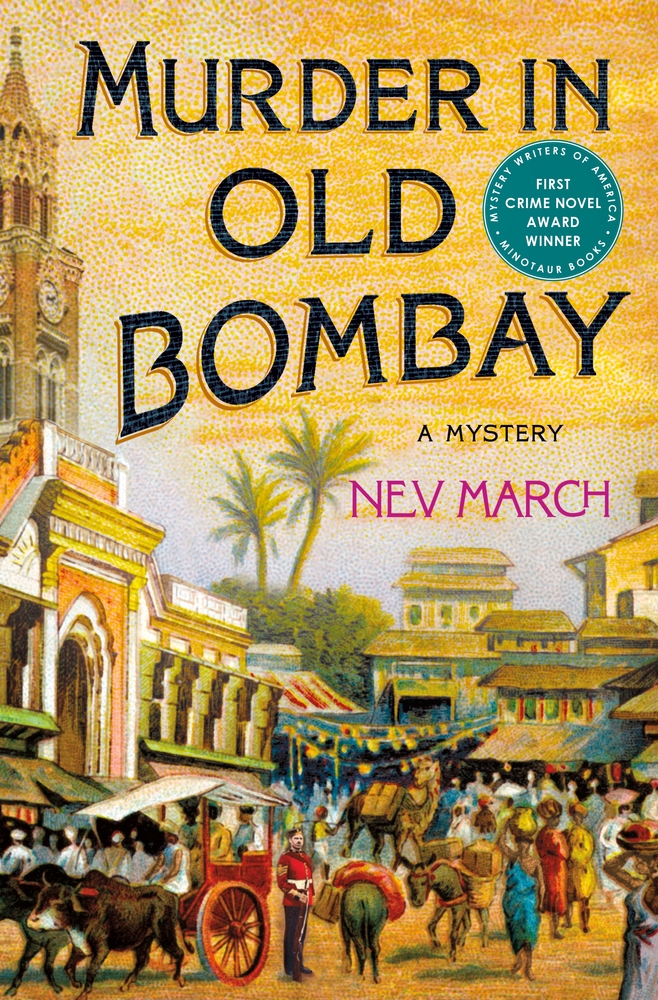
Sunday Review: Murder in Old Bombay by Nev March

This novel begins with an interesting premise: Captain Jim Agnihotri, an Anglo-Indian officer whose English father is unknown, is in a military hospital recovering from injuries he received in a violent skirmish near Karachi. For a long time after being wounded, he does little but reread the cases of his hero Sherlock Holmes. Then one day, a newspaper article about a shocking event in Bombay—two Indian women from a prominent Parsee family fall to their deaths from the high clock tower—captures his attention. Adi, the husband of one of the women and cousin of the other, is quoted as saying he feels left behind. Which is precisely how Captain Jim feels about surviving the battle in which many of his men were killed.

On impulse, Jim approaches the grieving man and is hired to investigate the case. The ensuing months of digging for answers forces Jim to deal with the complex rules of the upper classes, the troubled waters of India’s political conflicts, and several physical dangers and endurance tests.

The mystery is interesting enough to keep the reader going. It takes a twisting path that goes in several unexpected directions. The characters are engaging; it is especially interesting that many of them are Parsee, an Indian minority I hadn’t encountered in fiction before. The setting is one I usually enjoy—I’ve read a fair number of Indian novels over the years—but I found that this novel didn’t feel quite as rich with sensory description as most of the others. Even so, I took enough pleasure in the book to give it a solid four-star rating.

Leave a comment

Filed under Book Reviews, Historical fiction, Indian fiction

Sunday Review: Paris Never Leaves You by Ellen Feldman

For the most part, I’m weary of all the historical novels set during the world wars, but once in a while, the premise of one will intrigue me enough to give it a chance. Paris Never Leaves You is such a novel. The story is told with the popular device of dual timelines—New York publishing during the 1950s and World War II in Paris—but it feels less disjointed than many such novels because one main character anchors both periods.

In the WWII storyline, Charlotte, a French war widow with a very young daughter, runs a bookstore with a friend during the German occupation of Paris. When the friend is arrested, Charlotte must survive on her own. She reluctantly forms a relationship with a German officer—a frequent bookshop customer—who can provide much-needed food for her child, but it is relationship riddled with danger for both of them.

During the later storyline, Charlotte is trying to live a low-key life in New York, doing her work as an editor and raising her teenage daughter Vivi. However, Charlotte faces an unexpected challenge when Vivi, who knows that in the last days of the war, she and her mother were imprisoned in a camp for French Jews, develops a sudden interest in exploring her Jewish heritage despite her mother’s agnosticism.

I’m reluctant to say more because the novel contains some surprise revelations—portrayals of survival strategies I haven’t seen in other novels set in this time period. Suffice it to say that it deals with the short-term and long-term costs of making moral compromises to stay alive.

For me, the book is a solid 4-star read. Not all of the relationships ring completely true to me, but they were plausible enough to keep reading and enjoy other aspects of the story.

Leave a comment

Filed under Book Reviews, Historical fiction, Twentieth century, World War II

Sunday Review: A Woman of Intelligence by Karin Tanabe

This novel seemed like an appropriate choice to follow up Stephanie Marie Thornton’s A Most Clever Girl because both deal with women in the intelligence game in mid-twentieth century United States. The premise intrigued me enough to overlook my qualms about the cover image: “It’s stunning,” I thought, “but that outfit is more 1962 than 1952.” In this case, I absolutely should have judged the book by its cover. The story never felt authentic to me.

Katharina, the daughter of immigrants, grew up speaking four languages and has since become conversational in at least one more—Russian. The novel opens in the early 1950s with Katharina and a friend watching their very young children in Central Park. The friend seems to have taken to motherhood effortlessly; she’s calm, empathetic, and decisive in dealing with her daughter and any crises that arise. In contrast, Katharina is easily overwhelmed by her rambunctious toddler and crying baby.

Once her “present-day situation” is established, we go back in time to her life just after World War II. Because of her skill set, Katharina gets a job as a simultaneous translator at the UN (similar to Audrey Hepburn in the movie Charade, which is one of my all-time favorites, so I was intrigued). However, from the start, I found it hard to relate to Katharina. Even though she mentions in passing that translating the important discussions at the UN helps her feel that she is contributing meaningfully to world peace, that doesn’t truly seem to be what she loves most about her life. Rather, she rhapsodizes about being single and going out with her French friend, eating great food, drinking all night, and flirting with men, often going to bed with them. She comes across as a shallow hedonist.

Unlike many young women of the time period, she is not pursuing marriage. However, when she meets handsome Tom Edgeworth, a devoted and much-loved pediatric surgeon, she falls for him and he for her. They marry, not exactly in haste, but without much effort to discover if they are truly compatible as life partners, not just dinner partners and bedmates. Tom has made it perfectly clear that he expects the woman he marries to provide him with children as quickly as possible and to devote herself to them full-time. It seems to me that if Katharina is half as intelligent as we’re supposed to believe, she would have seen the red flags right away. Her French friend certainly tried to get her to view the prospect realistically. Yet Katharina marries Tom with a disturbing lack of concern.

Faster forward to motherhood, and Katharina is miserable, “trapped in a gilded cage” as the book jacket says. When she develops insomnia and starts drinking heavily and behaving erratically, Tom has little sympathy for his wife. Instead, he grows even more rigid even though he suspects she is having a breakdown.

Suddenly, in the midst of this increasing discord, the FBI recruits her. They plan to arrange things so she’ll encounter her former college lover, Jacob Gornev, in hopes that she will eventually be able to spy on him—because he is highly placed among American communists. (Is it just a coincidence that his name is so similar to Jacob Golos, the real-life communist spy who played such a prominence role in A Most Cleve Girl? I doubt it.)

Katharina’s main contact at the FBI is Turner Wells, a black agent who is spying on a civil rights group because, although he believes in civil rights, he’s afraid of too much communist influence on the movement. (A situation I found to be really distasteful and rather peculiar for a white author to place her one prominent and supposedly sympathetic character of color in.) To add one more bit of spice to this improbable stew of ingredients, Tanabe decided to have Katharina feel an almost instantaneous but forbidden sexual attraction to Turner.

The feminist exploration of motherhood might have worked on its own or with a different partner story, and the tangled loyalties of FBI agents could have been quite interesting. But the two storylines felt forced together in a marriage that was as incompatible as Katharina and Tom’s.

Leave a comment

Filed under American history, Book Reviews, Historical fiction, Twentieth century

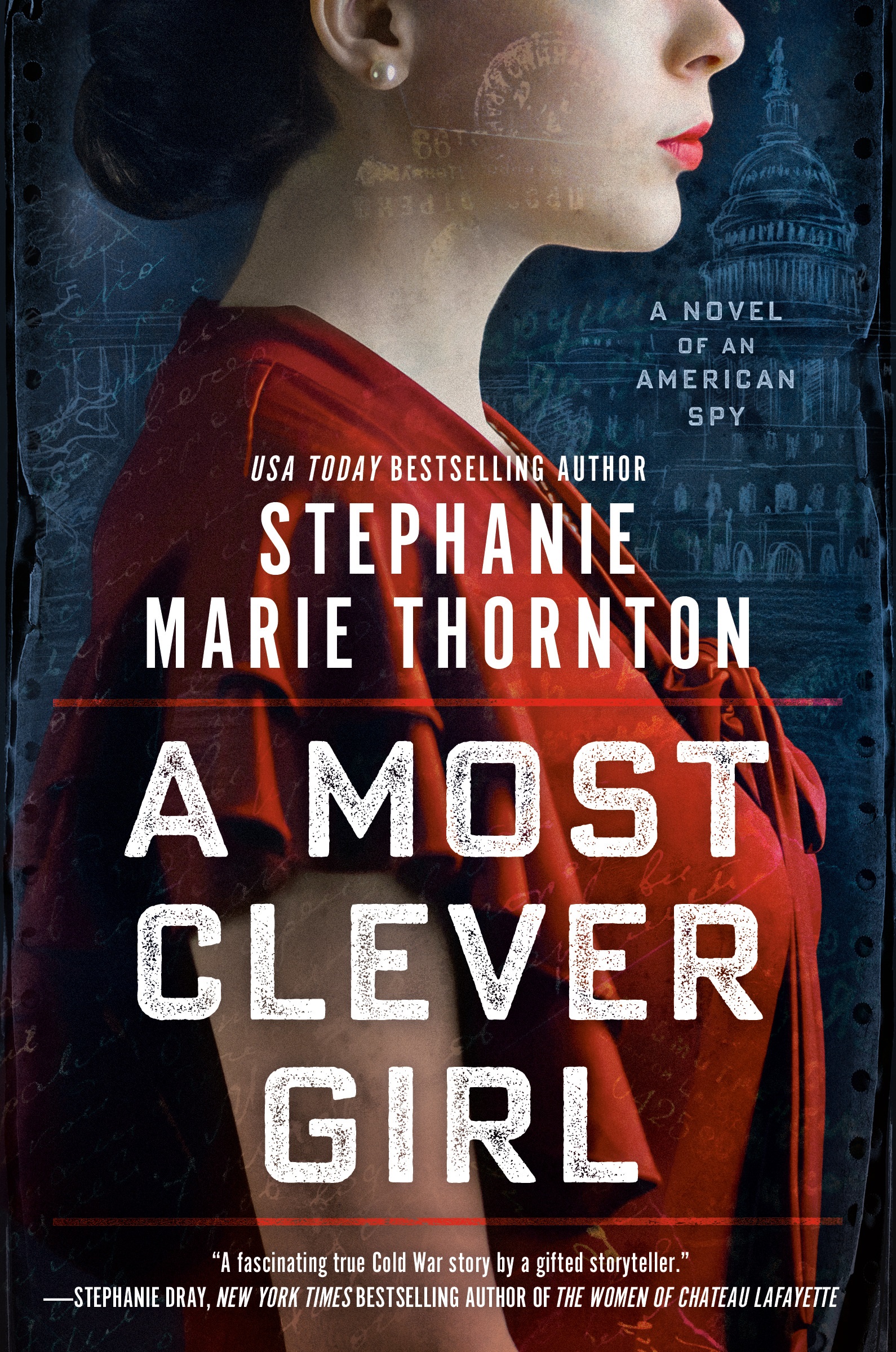
Sunday Review: A Most Clever Girl by Stephanie Marie Thornton

This historical novel is based on the life of Elizabeth Bentley, an American who was recruited into the American Communist Party by friends. Soon thereafter, Bentley discovers a valuable role she can play for the party, a role that she believes will also help her country. Bentley falls in love with her handler, Jacob Golos, and together they form the largest foreign spy ring in the United States. All through World War II, she tells herself that she is not a traitor to her country because the Soviet Union is a U.S. ally so to help one is to help the other.

Things become much more perilous after the war when the United States and Soviet Union enter the period of hostility known as the Cold War. Events test Elizabeth’s loyalties until eventually she must irrevocably choose sides.

Bentley’s life is fascinating, and she certainly played a pivotal role in the mid-twentieth-century history. However, my enthusiasm for the novel was blunted a bit by its format. It is told as a dialogue between Elizabeth and a young woman who is searching for answers about her biological mother, whom she believes was one of Elizabeth’s associates. I think the story would have been more vivid if it hadn’t been spun in this retrospective way.

Despite that quibble, I recommend A Most Clever Girl to anyone interested in the era of Red scares, McCarthyism, and the Cold War.

Leave a comment

Filed under American history, Book Reviews, Historical fiction, Twentieth century

Sunday Review: Painting the Light by Sally Cabot Gunning

I was first drawn to this historical novel because it’s about an artist. As it turns out, the subject of painting plays less of a role in the story than I’d hoped, but I still enjoyed it thoroughly.

Ida Russell has been battered by life’s storms. Before the story opens, every member of her family of origin has died from drowning: her father and two brothers by accident, her mother by suicide. Before these tragedies, Ida was a promising painter and art student in Boston. However, lonely and weighed down by grief, she decides after an all-too-brief courtship to marry Ezra Pease, a sheep farmer from Martha’s Vineyard.

After the marriage, Ida discovers to her chagrin that Ezra is a lazy farmer, an unkind husband who alternates between inattention and disparagement, and a habitual gambler who takes part in nightly poker games in town. The charm he displayed during their courtship has vanished, along with her family property, which he sold as soon as he had the legal right as her husband to do so. The running of the household and many of the duties of the farm fall to Ida, leaving her no time to paint. Two years into their marriage, Ezra and Ida are barely on speaking terms.

Ezra and a friend named Mose open a salvage company, and the work occasionally takes them away from home—absences that Ida relishes—but that business doesn’t prosper any more than the farm does. Shortly after the novel begins, Ezra and Mose leave for a salvage job in Rhode Island. While they are away, a terrible storm hits, and their company boat catches fire and sinks. A ship named the Portland traveling to Rhode Island also sinks with great loss of life. A few days afterward, Ida is stunned to receive a letter from Ezra written just before he and Mose were about to board the ill-fated vessel. Although their bodies never wash ashore, they are presumed dead because only a small portion of those lost in the Portland are ever recovered. Although Ida retains little love for her husband, losing another person to drowning feels like an unnecessarily cruel trick of fate.

As Ida sets to work trying to make sense of her husband’s assets, she encounters Mose’s brother, Henry Barstow, a man she’s met before and liked. They team up to settle the estate and see if anything remains for either of them to inherit. Ida’s financial situation is dire. Ezra’s lies and deceptions—and the destruction of the salvage boat—have left her with nothing to live on but the grudging support of her husband’s aunt. Complicating matters, Ida finds herself more and more attracted to Henry, who is married but also in a foundering relationship.

Ida makes many discoveries through the course of the story—about her husband, about secret schemes, and about the island residents it takes her so long to come to know. Most importantly, she learns to rely on herself and to feel confidence in her own opinions rather than society’s dictates. 

Highly recommended.

Leave a comment

Filed under 19th century life, American history, Book Reviews, Historical fiction