Category Archives: contemporary fiction

Sunday Review: Last Call at Smokey Row by Pat Camalliere

Last Call at Smokey Row is a departure for Pat Camalliere, whose previous novels are part of a series of historical mysteries that take place in Lemont, IL. Although also set in Lemont, the latest novel is more what I’d classify as a contemporary woman’s novel set in the early 1980s. 

The main character and narrator, Jane Archer, is someone many people can relate to. Raised in a Catholic family, she pursued the goals she thought a good, responsible girl should: education, marriage, a suitable career for a woman—in her case, teaching high school biology. But at the age of 33, she finds herself a divorced ex-teacher, living alone for the first time in her life, working a dead-end job in a grocery store, and wondering if she has the stamina and motivation to figure out what to do next. 

Invited by a coworker who participates in a pool league, Jane visits a local tavern called Sami’s. There she meets a collection of people seemingly as adrift as she is: a divorced father being bled dry by his ex, a young woman with no apparent ambition, a traumatized Vietnam vet who rarely talks, another divorced man with the burden of caring for an agoraphobic and hostile mother, and an assortment of other drunks, gamblers, bullies, and weirdos.

Her newfound acquaintances force Jane to think deeply about questions such as, “Why are some people able to find purpose in life, and why do others remain lost or even mired in past heartache?” “Am I taking too long to move forward from my recent failures?” “Do I even know what I want?” Which of us has not asked ourselves questions like these?

In time, Jane builds relationships at Sami’s, some closer than others. With the help of one of her newfound friends, she slowly begins to find a new career path and perhaps even the hope of romance. 

With such a diverse mix of personalities, problems in the group are sure to bubble up. One conflict gets resolved in a way that I guarantee you won’t see coming. Through it all, Jane responds to the events around her by continuing to ask questions and to grow. Despite the large cast of characters, it is her story above all, and Camalliere brings it to a satisfying end. 

Leave a comment

Filed under contemporary fiction, Novels about women, Romance, Twentieth century

Sunday Review: Two Novels about 20th Century Icons

I recently read two historical novels about women who achieved great fame during the mid-twentieth century. Both books are based on research but are essentially fictional retellings of the historical personages’ life.

The first was Maria by Michelle Moran, a novel about Maria Von Trapp. Moran attempts to debunk some of the misconceptions about the characters of Maria and the captain and also to reveal a more accurate story about the family and their escape from Austria. The story is framed by Maria’s attempt to have inaccuracies in the musical The Sound of Music changed before its premiere, but anyone who knows show business will know that she’s waited too long. Opening is just a couple of weeks away. To appease her, Oscar Hammerstein sends his assistant Frances (a fictional character) to listen to Maria’s concerns and take notes—notes that almost everyone but Maria realizes will never be used.

Moran knows how to tell a well-paced story with engaging characters. I enjoyed learning about what was true and untrue in the beloved musical, as well as finding out more about what happened to the Trapp family afterward. Another unexpected subplot concerned the decline of Hammerstein’s health: The Sound of Music was his last show; he died very shortly afterward. I recommend the book to anyone who’s loved the musical and wants to know more.

The second novel was Can’t We Be Friends? by a team of authors: Denny S. Bryce and Eliza Knight. Also based on research, it’s an imagined account of the extraordinary friendship between jazz singer Ella Fitzgerald and actor Marilyn Monroe. The novel alternates between the perspectives of the two main characters.

I was surprised to learn how much the two women had in common and how very supportive of each other they were during their separate struggles with an entertainment industry that wants to control women as commodities. As anyone who’s paid attention to Taylor Swift knows, this is an ongoing struggle today.

Because Fitzgerald and Monroe’s friendship was largely private, I think these authors had to invent more of the novel’s events than did Moran in Maria. For example, they had to decide how to portray Monroe’s marriages to Joe DiMaggio and Arthur Miller, both of which have been subjects of vastly differing interpretations. Having it told by two authors made each character’s voice distinct, and the novel engaged me and gave me a deeper understanding of both women. I particularly found it an extremely emotional experience to read about Monroe’s tragic downward spiral in the last years of her life. I recommend this novel to people interested in the back story of famous icons of pop culture, especially women who tried to fight the patriarchal system.

Leave a comment

Filed under Book Reviews, contemporary fiction, Historical fiction, Twentieth century

Sunday Review: The Grey Wolf by Louise Penny

First, a personal word. I haven’t posted here in a long time because of a combination of work stress followed by a traumatic family loss. I’m going to do my best to start posting regularly again, beginning with resurrecting my Sunday reviews.

I have been a Louise Penny fan since the beginning of the Armand Gamache series. In the last few years, however, I’ve begun to approach Penny’s books with a pinch of dread. Will this be one I love? Or will she return to the type of plot line I’ve grown weary of?

I think it’s very difficult to be a writer of mysteries, particularly if you set your novels in a small town or village. Would anyone in their right mind want to live in the same village as Miss Marple? That’s like asking to be murdered. Eventually, the series of terrible crimes in such a contained location begins to seem absurd. At which point, the author has to embrace the whimsy (Midsomer Murders, anyone?) or find an alternate story line.

The early Gamache novels centered on Three Pines, a charming fictional village that time forgot, home to a set of wonderfully lovable and eccentric characters. Eventually, however, Gamache was promoted to too high a position for it to be believable that he would investigate killings in such a relatively unimportant place. That’s when the books began to feature the “Gamache uncovers a massive conspiracy” plot lines. And that’s when I began to find the books increasingly less enjoyable.

I still read them because I love Gamache, his family, and circle of friends. Some of the conspiracy novels have managed to engage me almost as much as the village cozy novels. Alas, The Grey Wolf, the latest installment, was not one of them.

Very little of the story was set in Three Pines. I miss Clara, with paint in her hair; Gabri and Olivier, the odd couple who run the bistro; wise Myrna Landers who owns the bookstore; and cantankerous poet Ruth with the pet duck who swears. And I’m weary of widespread sinister plots that threaten Quebec.

The other problem with The Grey Wolf is that it is so convoluted. Gamache and his second-in-command Jean-Guy Beauvoir return to the isolated monastery that was the setting for The Beautiful Mystery and then travel to one of the remotest points of Quebec, while Isabelle LaCoste (Gamache’s other second-in-command—illogical but just accept it) travels to the fortress monastery of Grand Chartreuse in France. Despite the slight problem that neither lay people nor women are allowed within its walls. The Sureté detectives are searching desperately for clues to stop a terrible crime of domestic terrorism from happening, even though they aren’t sure at first exactly what the crime will be.

The plot is difficult to follow—I got so confused that I stopped in the middle to reread The Beautiful Mystery, which wasn’t much help so I don’t recommend following my example. And the story drags. For only the second time, I gave a Louise Penny novel only three stars.

The last time I did that was for book 16. The next two were 5-star reads for me. The Grey Wolf was book 19.

I really hope Penny can find a way to balance the sweeping plots she seems drawn to now with the loving closeups of eccentric humanity that made many of us fall in love with her books. I’ll read her next book before deciding if I want to continue. There are too many other books to continue a series I no longer enjoy simply out of loyalty.

Leave a comment

Filed under Book Reviews, contemporary fiction, mystery

Sunday Review: The Great Believers by Rebecca Makkai

I really didn’t know what to expect when I started The Great Believers, but now I think it’s the best book I’ve read so far this year.

It’s a duel timeline novel. One story, set from 1985 to 1990, chronicles the tragic losses that occur when the AIDS epidemic reaches Chicago and begins to spread among the LGBTQ committee there—among the first generation to really experience the exuberance of living fully out and celebrating gay pride. The point of view character for this timeline is Yale Tishman, a thoughtful, quiet man who is trying to build a world-class gallery at Northwestern University and is in a relationship with Charlie Keen, who publishers a newspaper focused on LGBTQ issues. Early in this narrative, one of their best friends—Nico Marcus—dies of AIDS, forcing them all to face what is happening and make hard choices (or not, depending on the person). Yale remains close with Nico’s younger sister Fiona, who becomes a fierce advocate for all of Nico’s friends, especially those who find themselves navigating the isolating journey that is AIDS.

The second timeline features Fiona in 2015. She’s a divorced women, suffering from PTSD because of all the losses she endured in the 1980s, running a charity thrift store whose proceeds go toward AIDS work, and struggling with guilt because she’s estranged from her daughter, Claire, who not only rejected Fiona but also disappeared into a cult. Someone sends Fiona a video of a young woman in Paris who might be Claire, so Fiona takes off to that city to try to track her down. While there, she stays with a gay photographer friend she’s known since the 1980s, a man who is about to open a major exhibition that will feature some of the images from the past.

The book is warm, evocative, devastating, beautiful, and heartbreaking. Each character is so vividly drawn. I loved both Yale and Fiona, and I felt so deeply for their situations. Even though the author is much younger than the people she’s writing about, this all felt very authentic to me. Because I lived in Chicago during the 1980s and worked with people who did some AIDS awareness projects at our company, I could remember a bit of what that period was like, although my experience of it was definitely far removed from what the characters of this book went through. This novel made me wish I’d forced myself to know more, care more, and do more about the crisis.

I honestly want to run around telling everyone I know to read this novel. It affected me that deeply.

Leave a comment

Filed under American history, Book Reviews, contemporary fiction, fiction, France, Historical fiction, Paris, Twentieth century

Sunday Review: The Reading by Barbara Monier

This is a novel about taking stock of one’s life—and perhaps finding the courage to jettison our defense mechanisms. Esmé, a writer in her sixties, is experiencing a prolonged creative paralysis. Instead of working on a new novel, she’s put off dealing with her writer’s block by continuing to give public readings of her last published work. Then one night someone from her past shows up in the audience, and the unexpected encounter propels her into reviewing both the childhood loss that scarred her and her first year of college, which she views as the worst year of her life. The two events have combined to turn her into a defensive person who deliberately avoids both memory and commitment.

Her voyage of reminiscence occurs at the same time that she faces an upheaval to her current life as major as her long-ago enrollment at a strange university in an alien part of the country. Her lover, Gino, has asked her to live with him, a move that will force her to leave the carefully constructed routine and cocoon that have surrounded and cushioned her for decades. Esmé makes the physical move, but can she risk the psychological and emotional shifts that will be necessary to commit herself to Gino? Or will she once again retreat?

Esmé is a sharply drawn character who makes mordant observants about the world and records her experiences in memorable detail—in sentences such as this one about a childhood visit to Pittsburgh: “The Sound of Music on a screen so immense that I felt pressed back in my seat by a barrage of pictures and sounds—I had nightmares about the Baroness’ nostrils and the way the peals of thunder rattled inside of my chest.”

The COVID-19 pandemic makes its appearance, but instead of dominating the narrative, it works on Esmé as it did on so many of us—as a catalyst toward reevaluating our lives. I found myself rooting for Esmé the entire novel, and the ending felt satisfying without being too tidy or forced.

The publication date for The Reading is September 27, but the Kindle version is available for preorder on Amazon, and the paperback can be preordered at Amika Press.

Leave a comment

Filed under Book Reviews, contemporary fiction, Twentieth century

Sunday Review: Fiction about Argentina’s Dirty War

For those who don’t know the history of the Dirty War, I am going to begin with some background. (If you already know, skip to the fifth paragraph.) From 1974 to 1983, Argentina conducted a Dirty War that consisted of state terrorism against its citizens. The government hunted down political dissidents, leftist guerillas, socialists—and any students, intellectuals, and activists the junta feared might become threats. 

People were snatched from school, work, home, the street. They were tortured for information and for punishment. They were beaten, shot, and buried in mass graves. They were drugged and thrown from airplanes, still alive, over open water. Even today, they are known as los desaparecidos, the disappeared. Pregnant women who were taken were held until they gave birth and then disposed of; their children were given to government officials or military officers who wanted to adopt. 

An estimated 30,000 Argentinians were disappeared, and an estimated 500 babies were stolen. Many of the grieving families still have no answers. Many of the perpetrators of these crimes against humanity were pardoned. Not until the 2000s did the Argentine government revoke the amnesty laws and begin prosecution. 

Because of my work on world history textbooks, I’ve known about the Dirty War for decades, but not until recently did it occur to me to read fiction about it. 

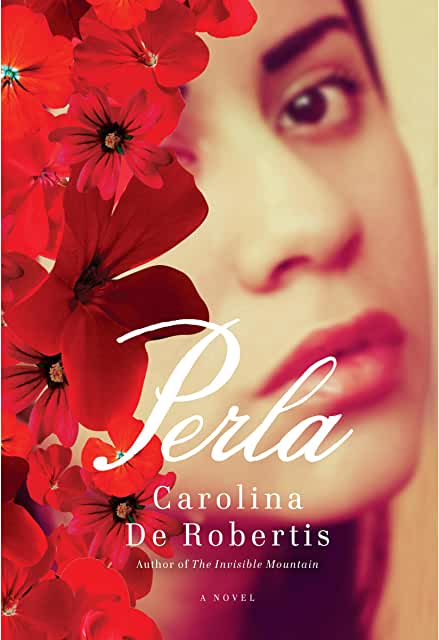
In the last two weeks, I have listened to audiobooks of two of them: On a Night of a Thousand Stars by Andrea Yaryura Clark and Perla by Carolina de Robertis. 

Purely by accident, I chose books that have several plot points and themes in common. Both have main characters who are young women, born during the Dirty War and raised in families that are part of the Argentinian elite. Both Paloma and Perla begin knowing little about their country’s terrible past. Both find romantic partners who help them learn the shocking history their parents hid from them—and their families’ own roles in the Dirty War. 

And yet, the two books are also quite different. On a Night of a Thousand Stars is the more straightforward narrative. It’s a dual timeline novel. One story focuses on Valentina, a young woman who attends college and then begins working as an architect during the opening years of the government campaign of terror. The other story, set twenty years later, focuses on Paloma, a young woman who is raised by Argentinian expats in New York City. Because her knowledge of Argentina has been gleaned mostly from visits to her grandfather, she starts out understanding little about the Dirty War, but she makes some discoveries that motivate her to find out what if any role her father played in combatting the oppression. Paloma’s father, who was once Valentina’s lover, is the link between the two time periods. 

Perla, on the other hand, has elements of magical realism, which felt entirely appropriate for the South American setting. The main character is the daughter of a naval officer, which is a huge red flag to the knowledgeable reader that her family has dark secrets to hide. Perla’s lover, an investigative journalist, nudges her to question her parents, but she can’t—and her inner conflict causes her to break up with him. Then, while her parents are away, she is visited by a mysterious man, who smells of rotting debris on a beach and who constantly sheds water on the parlor floor. This uncanny intruder is the catalyst that helps Perla intuit her past. 

I enjoyed both novels. My personal favorite was Perla, which was more literary and, for me, better conveyed the tragedy of Argentina’s past. But for readers who don’t enjoy magical realism, I can recommend On a Night of a Thousand Stars without hesitation. 

Leave a comment

Filed under Book Reviews, contemporary fiction, Historical fiction, Twentieth century

Sunday Review: How to Knit a Murder by Sally Goldenbaum

I bought this audiobook because a) it was on sale, b) the setting looked interesting, c) I’m a lifelong knitter, and d) I wanted something light but not TOO light. Most of those expectations were fulfilled.

However, before buying, I looked it up on Amazon and saw that it was listed aa #2 of series, so even though I prefer to read mysteries series in order, I thought dipping in this early wouldn’t be too bad, and if I liked it, I could go back and catch up on the opening installment without too much confusion. 

Except the label on Amazon is deceptive. This isn’t book 2 of 5. it’s book 12 of I don’t know how many—16 maybe? Apparently, the author switched publishers after 11 books, and the publisher decided to restart the numbering. Why would they do that? It’s very confusing to readers, and one of the most basic rules of marketing is not to confuse or annoy your customers.

Anyway, the whole time I was reading it, I was having difficulty remembering the characters who seemed to be the recurring cast. I’d get bits of their personalities here and there—but not enough to stick. It was like transferring to a new high school halfway through junior year and not only being unable to break into the in group but also finding it impossible to glean enough information to understand the relationships swirling around you.

The mystery was fine, although I easily spotted the essential piece of information that was tossed out casually about halfway through the book. But I just couldn’t engage enough with the knitting group to want to spend time with this town or these characters further, certainly not enough to go back and wade through 12 books to reach this point and move forward. 

I feel like I’m being unnecessarily negative and I’m punishing the author for something the publisher did, but I don’t like being led to expect something that isn’t what I’m getting. Perhaps if Kindle or one of the audiobook vendors I use offers a really cheap version of the real book 1 in the series, I’ll give it another try, or maybe I’ll eventually see if my library carries the books. But not until I’ve had a chance to let the irritation settle and see whether I develop any curiosity about the characters.

Leave a comment

Filed under Book Reviews, contemporary fiction, cozy mystery

Sunday Review: How the Deer Moon Hungers by Susan Wingate

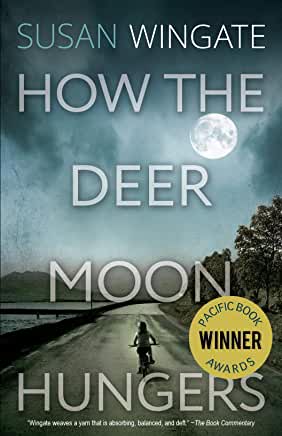
The novel opens with a throat-grabbing scene narrated by the spirit of seven-year-old Tessa, who floats above a team of paramedics who are frantically trying to save her life as they transport her to an emergency room after an accident. Then the story jumps back in time several days.

Tessa and her sixteen-year-old sister Mackenzie, live on an island in the Pacific Northwest with their mother Uma, who is stressed out, overwhelmed, and raging since her husband left the family. Mackenzie—Mac—just wants to be a teenage girl, hanging out with her best friend Gemma, rolling her eyes at the things grownups do, and maybe, if she works up enough nerve, giving in to her friend’s urging to try marijuana. But because Uma is too overwhelmed to handle her current life, Mac also has to spend more time than she’d like looking after Tessa. The two sisters adore each other, but having a seven-year-old tag along can really cramp a teenager’s style.

Then the unthinkable happens. On a day when Mac and Gemma planned to do “big kid” things, they have to take Tessa with them. During a few minutes of inattention on the older girls’ part, the local drunk runs over Tessa and her bike with his massive tank of a car.

Tessa dies, and Uma blames her older daughter. So do the police, who decide—based on some dubious eyewitness testimony—to arrest Mac on drug charges. The only people who can vouch for Mac’s innocence choose self-protection rather than honesty, and Mac finds herself being sent to juvenile detention, where her already shattered life turns into a nightmare of terror and abuse.

Fortunately, Susan Wingate doesn’t leave us there but rather takes us through the worst of it and into the early stages of Mac’s road to redemption and healing. I recommend this to anyone who wants to be reminded of the possibility of hope after deep despair.

Leave a comment

Filed under Book Reviews, contemporary fiction

Sunday Review: Midnight at the Blackbird Cafe by Heather Webber

This novel is an enjoyable blend of Southern family saga meets magical realism. Anna Kate is a young woman on the verge of starting medical school, less because she wants to than because she promised her late mother Eden that she would take up the career her father never got to practice. A few months before med school is about to start, Anna Kate’s maternal grandmother Zee dies, leaving Anna Kate an estate with a catch.

Zee practiced folk medicine and ran the Blackbird Cafe in Wicklow, Alabama—a town that Eden left behind when her boyfriend was killed in an accident because his parents unjustly accused her of crashing the car on purpose in an attempted murder-suicide. Because of her mother’s painful feelings about the town, Anna Kate has never been there. Now Zee’s will has left the cafe to Anna Kate with the stipulation that she must run it for two months before she can inherit the property and sell it.

It doesn’t take Anna Kate long after arriving in Wicklow to learn that the Blackbird is no ordinary cafe. The pies sold there are said to have magical powers to bring those who are grieving messages from beyond the grave. Except that when Anna Kate bakes the pies, the messages don’t come. “The pies are broken.”

A whimsical yet poignant tale ensues that encompasses solving family mysteries, establishing bonds with estranged relatives, weighing the value of old promises, and possibly finding love. The novel is comforting and thought provoking at the same time. But be forewarned. It will give you a craving for pie, blackberry iced tea, and buttermilk fried chicken.

Leave a comment

Filed under Book Reviews, contemporary fiction, Romance

Sunday Review: The Sentence by Louise Erdrich

I read this book because a friend strongly recommended it on Facebook, and while I’m not sorry I did, I didn’t love it as much as she did nor as much as I hoped I would.

The main character is Tookie, an Ojibwe woman with a criminal past. She is convinced by a woman she loves to commit one crime, only to learn afterward that she has been set up to be guilty of an entirely different offense. The judge hands her an extremely harsh sentence, but after several years, her lawyer manages to get it reduced and Tookie is released. Her time in prison turned Tookie into a voracious reader, so she applies for a job at Louise Erdrich’s independent store Birchbark Books. This was the first thing that made it hard for me to connect to the story. To have Louise Erdrich write about herself as a minor character in her own novel felt too meta to me, and I didn’t enjoy the archness of it.

Tookie herself is a complex character, scarred but with the potential for warmth and growth. She turns out to be a great bookseller. Because of the wide and eclectic reading experience she gained in prison and has continued on the outside, she is often able to help customers find books they will love. Her most annoying regular customer is a woman named Flora, who does a great many charitable deeds but also insists without any concrete evidence that she too has Native ancestry. Flora dies on All Souls Day, 2019, but she refuses to rest in peace. Instead, she haunts the bookstore by returning every day at her normal time and moving to all her favorite spots within the building. In particular, Flora is drawn to Tookie, and one of the essential questions of the novel is why.

As the weeks pass, Flora persists and Tookie becomes more and more desperate to figure out how to persuade her to leave. The year draws to a close, and as it does, we as readers know something the characters do not: COVID-19 is coming, and their lives will be forever changed. Not only COVID, but this is Minneapolis, so the murder of George Floyd and the subsequent unrest will become part of the storyline too.

And here is where I experienced my other big disconnect from the story. I expected these two catastrophes to stir me deeply, but they did not. I don’t know if the problem is that I’m still too numb (I lost a dearly loved brother to COVID) or if Louise Erdrich didn’t have enough distance from the events to be able to write about them with power and insight. Either is possible—or both in tandem.

All I know is that the book did not move me in the way I’d hoped. Reactions to fiction are subjective—as an author myself, I know that well—so I don’t offer this as a definitive response to The Sentence. If the premise of the book intrigues you, I recommend that you give it a try and decide for yourself.

Leave a comment

Filed under Book Reviews, contemporary fiction, fiction