Category Archives: Book Reviews

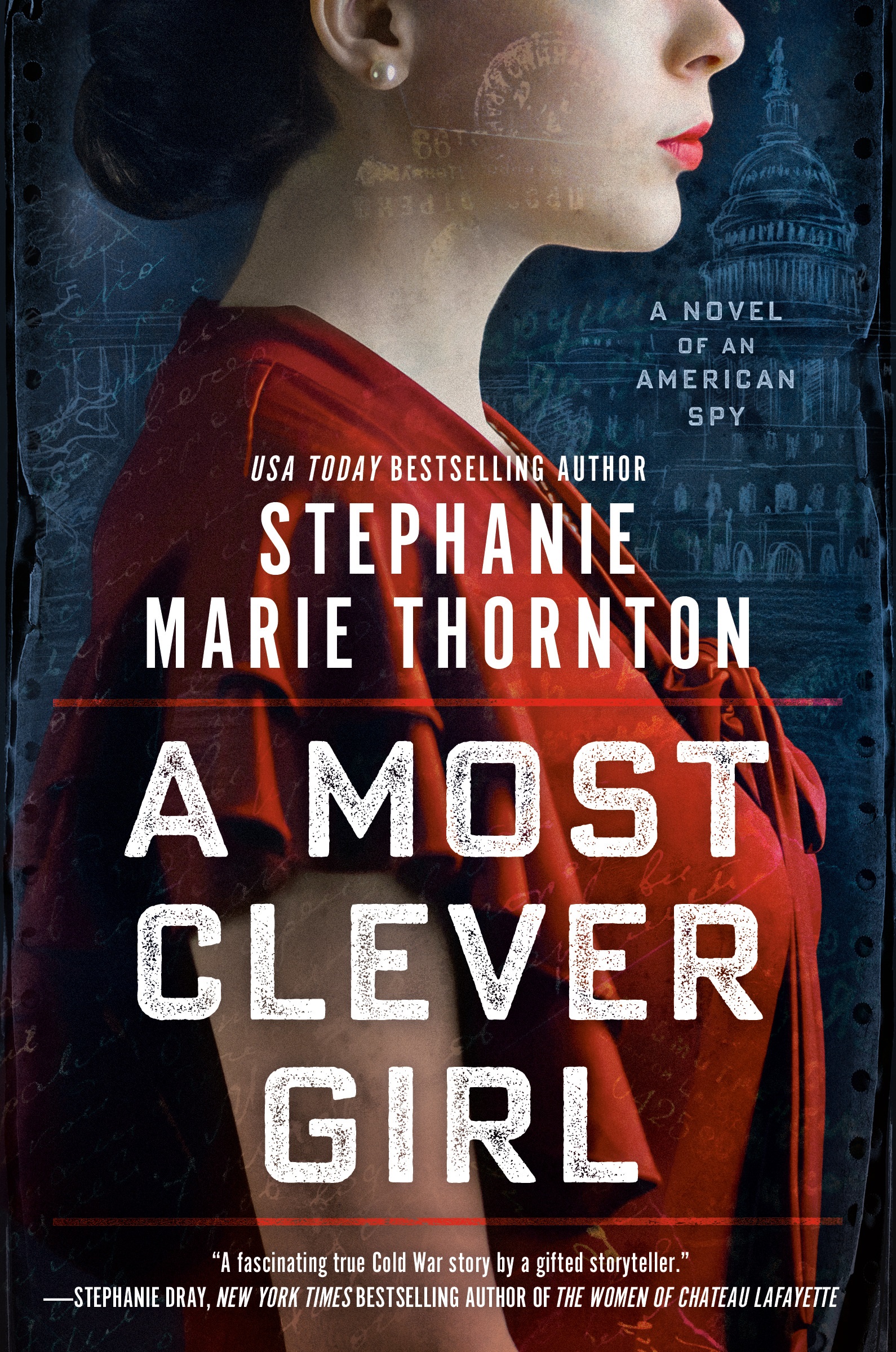
Sunday Review: A Most Clever Girl by Stephanie Marie Thornton

This historical novel is based on the life of Elizabeth Bentley, an American who was recruited into the American Communist Party by friends. Soon thereafter, Bentley discovers a valuable role she can play for the party, a role that she believes will also help her country. Bentley falls in love with her handler, Jacob Golos, and together they form the largest foreign spy ring in the United States. All through World War II, she tells herself that she is not a traitor to her country because the Soviet Union is a U.S. ally so to help one is to help the other.

Things become much more perilous after the war when the United States and Soviet Union enter the period of hostility known as the Cold War. Events test Elizabeth’s loyalties until eventually she must irrevocably choose sides.

Bentley’s life is fascinating, and she certainly played a pivotal role in the mid-twentieth-century history. However, my enthusiasm for the novel was blunted a bit by its format. It is told as a dialogue between Elizabeth and a young woman who is searching for answers about her biological mother, whom she believes was one of Elizabeth’s associates. I think the story would have been more vivid if it hadn’t been spun in this retrospective way.

Despite that quibble, I recommend A Most Clever Girl to anyone interested in the era of Red scares, McCarthyism, and the Cold War.
Leave a comment

Filed under American history, Book Reviews, Historical fiction, Twentieth century

Sunday Review: Broken Horses by Brandi Carlile

Because I am a novelist, I tend to read mostly fiction. However, my husband and I are also big Brandi Carlile fans, so when I heard that she had written a memoir, I immediately put myself on the wait list to get the audiobook from our library. A friend told me that the audiobook version is the best one for this memoir because the author narrates it herself and sings at the end of chapters. Sometimes more than one song.

Carlile is the oldest of three siblings born to young parents; she grew up in Washington State, moving from house to house and changing schools constantly. Her family was loving but dysfunctional. As Carlile herself writes, she experienced several brutal things in her childhood—but she experienced inexplicable miracles too. She has a strong streak of mysticism that permeates the book.

During her formative years, she dealt with several important identity issues. She idolized Elton John and wanted to become a star singer, but the singing contests available to her awarded only the big-haired, prettily dressed girls embodying the traditional femininity typical of country music of the time. As someone gradually growing aware of being a lesbian, Carlile had little interest in that type of conformity. She developed a deep belief in God, but when she tried to make a public profession of her faith, she was humiliated by a Baptist minister who couldn’t accept LGBTQ christians. The book also chronicles the course of her career and her journey toward finding a happy, fulfilling family life.

It’s an incredible story, one that will be appreciate by any fan of her music and also people who are interested in LGBTQ memoirs.

Leave a comment

Filed under Book Reviews, memoir

Sunday Review: Painting the Light by Sally Cabot Gunning

I was first drawn to this historical novel because it’s about an artist. As it turns out, the subject of painting plays less of a role in the story than I’d hoped, but I still enjoyed it thoroughly.

Ida Russell has been battered by life’s storms. Before the story opens, every member of her family of origin has died from drowning: her father and two brothers by accident, her mother by suicide. Before these tragedies, Ida was a promising painter and art student in Boston. However, lonely and weighed down by grief, she decides after an all-too-brief courtship to marry Ezra Pease, a sheep farmer from Martha’s Vineyard.

After the marriage, Ida discovers to her chagrin that Ezra is a lazy farmer, an unkind husband who alternates between inattention and disparagement, and a habitual gambler who takes part in nightly poker games in town. The charm he displayed during their courtship has vanished, along with her family property, which he sold as soon as he had the legal right as her husband to do so. The running of the household and many of the duties of the farm fall to Ida, leaving her no time to paint. Two years into their marriage, Ezra and Ida are barely on speaking terms.

Ezra and a friend named Mose open a salvage company, and the work occasionally takes them away from home—absences that Ida relishes—but that business doesn’t prosper any more than the farm does. Shortly after the novel begins, Ezra and Mose leave for a salvage job in Rhode Island. While they are away, a terrible storm hits, and their company boat catches fire and sinks. A ship named the Portland traveling to Rhode Island also sinks with great loss of life. A few days afterward, Ida is stunned to receive a letter from Ezra written just before he and Mose were about to board the ill-fated vessel. Although their bodies never wash ashore, they are presumed dead because only a small portion of those lost in the Portland are ever recovered. Although Ida retains little love for her husband, losing another person to drowning feels like an unnecessarily cruel trick of fate.

As Ida sets to work trying to make sense of her husband’s assets, she encounters Mose’s brother, Henry Barstow, a man she’s met before and liked. They team up to settle the estate and see if anything remains for either of them to inherit. Ida’s financial situation is dire. Ezra’s lies and deceptions—and the destruction of the salvage boat—have left her with nothing to live on but the grudging support of her husband’s aunt. Complicating matters, Ida finds herself more and more attracted to Henry, who is married but also in a foundering relationship.

Ida makes many discoveries through the course of the story—about her husband, about secret schemes, and about the island residents it takes her so long to come to know. Most importantly, she learns to rely on herself and to feel confidence in her own opinions rather than society’s dictates. 

Highly recommended.

Leave a comment

Filed under 19th century life, American history, Book Reviews, Historical fiction

Sunday Review: The Sentence by Louise Erdrich

I read this book because a friend strongly recommended it on Facebook, and while I’m not sorry I did, I didn’t love it as much as she did nor as much as I hoped I would.

The main character is Tookie, an Ojibwe woman with a criminal past. She is convinced by a woman she loves to commit one crime, only to learn afterward that she has been set up to be guilty of an entirely different offense. The judge hands her an extremely harsh sentence, but after several years, her lawyer manages to get it reduced and Tookie is released. Her time in prison turned Tookie into a voracious reader, so she applies for a job at Louise Erdrich’s independent store Birchbark Books. This was the first thing that made it hard for me to connect to the story. To have Louise Erdrich write about herself as a minor character in her own novel felt too meta to me, and I didn’t enjoy the archness of it.

Tookie herself is a complex character, scarred but with the potential for warmth and growth. She turns out to be a great bookseller. Because of the wide and eclectic reading experience she gained in prison and has continued on the outside, she is often able to help customers find books they will love. Her most annoying regular customer is a woman named Flora, who does a great many charitable deeds but also insists without any concrete evidence that she too has Native ancestry. Flora dies on All Souls Day, 2019, but she refuses to rest in peace. Instead, she haunts the bookstore by returning every day at her normal time and moving to all her favorite spots within the building. In particular, Flora is drawn to Tookie, and one of the essential questions of the novel is why.

As the weeks pass, Flora persists and Tookie becomes more and more desperate to figure out how to persuade her to leave. The year draws to a close, and as it does, we as readers know something the characters do not: COVID-19 is coming, and their lives will be forever changed. Not only COVID, but this is Minneapolis, so the murder of George Floyd and the subsequent unrest will become part of the storyline too.

And here is where I experienced my other big disconnect from the story. I expected these two catastrophes to stir me deeply, but they did not. I don’t know if the problem is that I’m still too numb (I lost a dearly loved brother to COVID) or if Louise Erdrich didn’t have enough distance from the events to be able to write about them with power and insight. Either is possible—or both in tandem.

All I know is that the book did not move me in the way I’d hoped. Reactions to fiction are subjective—as an author myself, I know that well—so I don’t offer this as a definitive response to The Sentence. If the premise of the book intrigues you, I recommend that you give it a try and decide for yourself.

Leave a comment

Filed under Book Reviews, contemporary fiction, fiction

Sunday Review: Billy Summers by Stephen King

I don’t read horror fiction, so I’ve never read much by Stephen King. A few years ago, however, I listened to 11/22/63 and really loved it. So when I saw the promotions for Billy Summers. I was intrigued.

Billy Summers is a hit man with an unusual past; his first murder was in response to abuse, and later he served as a sniper in Iraq, which gave him professional training. To reconcile his conscience with what he does for a living, Billy reassures himself that he kills only “bad people.” 

Now in his mid-forties, Billy has had enough and wants to retire. He decides to take one last job—even though he knows from movies and novels that the “one last job” always turns out to be a disaster. His anonymous client is offering a fortune, large enough for him to quit forever, and the temptation is impossible to resist.

The catch is that Billy needs to hole up in a small town for weeks or perhaps months waiting for his target to be extradited from California. He’s going to take the shot from an office building near the courthouse, and his cover for being there is that he’s a writer who needs to be on his own and away from temptation to finish the book he’s promised his publisher. To pass the endless hours, he actually does begin to write his memoir and finds the process of telling his story both addictive and therapeutic. This book within a book is just as engaging as the story that frames it.

However, Billy’s self-protective hackles soon rise as he senses that the job isn’t quite what it seems. The man who’s renting him the office space and supplying the weapon is tense and scared, and Billy deduces that the poor guy is the weak link in the chain and being set up as a patsy. Then, when Billy hears the arrangements that have been made for his own getaway, he suspects that the plans involve putting him six feet under rather spiriting him six hundred miles north. So he goes rogue and puts together his own fake id and method of extricating himself from the crime scene.

More complications arise in the form of an unexpected and unwise relationship with a victimized young woman and an investigation by Billy and his manager into the shadowy figure behind the Byzantine assassination scheme. The reader is left racing through pages to find out if Billy will indeed pull himself out of his underworld life and make it to happily ever after.

4 stars of 5

Leave a comment

Filed under Book Reviews, contemporary fiction, fiction

Sunday Review: The Remains of the Day by Kazuo Ishiguro

I have mixed feelings about this novel. On the one hand, I recognize its brilliance. On the other, I developed no emotional connection to it or to the characters.

The plot is deceptively simple. The narrator, Stevens, has been the butler at Darlington Hall for decades. Most of that time, he served Lord Darlington; now in the mid-1950s, he works for an American and has a tiny staff compared to the house’s past glory days.

Stevens is the son of a butler and has given years of thought to what constitutes a “great” butler; he concludes that what defines a butler at the top of his profession is not a polished manner or administrative tricks to ease the running of a great house. No, the important quality is dignity: the ability to serve with efficiency, aplomb, and a reserved demeanor even in a crisis and, above all, never reveal when one is dealing with personal difficulties of a physical or emotional nature.

The novel opens in 1956 with Stevens’s current employer offering to let him take time off for a brief vacation: a road trip through the West Country of England. Stevens hesitates at first—he is not accustomed to taking a holiday or indeed doing anything for his own pleasure—but then he justifies the excursion by deciding to visit a former housekeeper with whom he worked for many years. Lately certain inefficiencies and mistakes have crept into the running of the house, and Stevens has decided that augmenting the staff is the answer to the problem. The former housekeeper’s correspondence has led him to think that she is unhappy in her marriage and perhaps has brought it to an end. Therefore, he convinces himself that she would welcome an invitation to resume her old position, and satisfied by that rationalization, he sets off on his trip.

During the several days of motoring, Stevens reviews his past career. In this novel, Ishiguro uses a similar device as in the recent Klara and the Sun: an unreliable and somewhat clueless narrator. Slowly over the course of Stevens’s reminiscences, the reader becomes aware that the true story of the events he recalls, the character of his former employer, and Stevens’s relationship with the housekeeper are somewhat different than Stevens has permitted himself to admit. The message of this story can be found only by reading between the lines.

Which brings me to my ambivalence. I’m not the type of reader who is satisfied by wholly cerebral books. For me, reading should be more than an intellectual exercise. To love a book deeply, I must love the characters. I don’t mind if they are flawed. I do mind if I find them inaccessible. Throughout this novel, I always felt removed from Stevens. And for that reason alone, I consider it a 4-star rather than a 5-star read.

Leave a comment

Filed under Book Reviews, Historical fiction

Sunday Review: The Secret Keeper of Jaipur by Alka Joshi

I really enjoy well-written Indian novels. The country is so vast with an ancient history and a wide diversity of regions and peoples. A few years ago, I read and loved Alka Joshi’s first novel, The Henna Artist, the story of Lakshmi, a determined woman who fled a bad marriage and found a way to use her knowledge of herbal remedies and the art of henna painting to support herself, a servant boy named Malik, and the sister who showed up unexpectedly on her doorstep. (The premise grabbed my interest right away because when I was in my late twenties, I attended the wedding of a beloved Afghan friend and got to experience having my hand painted with henna before the ceremony.)

This week, I read The Secret Keeper of Jaipur, which is a sequel to the first novel. Set 12 years after The Henna Artist, it focuses on Lakshmi and most especially Malik. The novel grabs the reader’s attention right away; 20-year-old Malik is in Jaipur learning the construction business from the renowned Singh-Sharma Construction Company, which has been building a world-class cinema for the Maharani Latika of Jaipur. At the grand opening, a disaster occurs when the balcony collapses, killing several people.

The novel then backtracks two months to allow readers both to catch their breath and to catch up with what’s happened to Malik, Lakshmi, and her sister Radha in the intervening years. Malik is now in love with a young woman who is every bit as strong, self-sufficient, and determined as Lakshmi. She’s also a recent widow who comes from a tribe of nomadic hill people, and she has two young children. Lakshmi is not at all sure this is the right partner for her protegé.

Then there is the mystery of why the building collapses. Inquisitive, streetwise Malik is the only person who doubts the official explanation, and he may be the only one who can save family friend Manu Agarwal from unjustly taking the blame for shoddy workmanship.

I recommend the book highly, as I do its prequel. It isn’t absolutely necessary to read the two in order, although the second book does contain some spoilers for the first. (P.S. Isn’t the cover absolutely gorgeous?)

Leave a comment

Filed under Book Reviews, fiction, Historical fiction, Indian fiction

Sunday Review: Where the Light Enters by Sara Donati

This novel is the sequel to the 2015 novel The Gilded Hour, which I also enjoyed.

Where the Light Enters takes place in New York in 1884, and through it, the reader gets to glimpse both those who are comfortably well off and those who are struggling just to survive. As in the previous novel, the two main characters are Doctors Anna and Sophie Savard. Anna is a surgeon. Sophie is a double rarity—not only a female physician, but also a multiracial one—which causes her to experience double-pronged discrimination. 

Anna and Sophie are cousins, but because both were orphaned as children, they were raised together by an aunt and are as close as (or possibly closer than) sisters. The story opens at a particularly difficult time for Sophie; she is returning from Europe, where her husband went to be treated for tuberculosis—without success. Now, as a widow who has inherited a substantial estate, she must decide whether to return to her medical practice and how else to carry on with her life when all she wants to do is grieve the man she has loved since they were children.

In the previous book, the two doctors—and their midwife aunt—came under the scrutiny of Anthony Comstock because of his crusade against the propagation of knowledge about birth control. Comstock appears in this novel as well, falsely accusing one of the cousins of urging a patient to have “an illegal operation,” i.e. an abortion.

Anna is married to Detective-Sergeant Jack Mezzanotte, whose large Italian family plays an important role in both books. Shortly after their marriage, Anna and Jack take in three Italian immigrant orphans, but the Church objects to the children being raised by people who aren’t “good Catholics.” The fate of the three Russo children is a thread that continues into Where the Light Enters.

Jack’s work as a police detective is another thread that ties both books together. In the first novel, he and his partner Oscar try to solve a series of six grisly murders that were apparently intended to punish women for seeking an abortion. The investigation of those cases continues into the second novel and grows more urgent when new cases arise that appear to be related to the earlier murders.

For me, the characters are what make this book an unforgettable experience. I loved Anna, Jack, Sophie, and Rosa especially, but all of the main and secondary characters are vividly drawn. The author does an adequate job filling the reader in on the essentials from the earlier story, so it’s not necessary to read the two novels in sequence, but I recommend doing so.

Leave a comment

Filed under 19th century life, American history, Book Reviews, Historical fiction

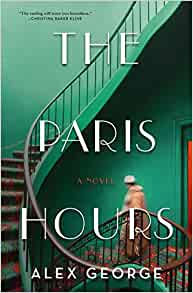
Sunday Review: The Paris Hours by Alex George

This literary novel, set in Paris during a single day in 1927, entranced me with its beauty and its intricate interweaving of four stories.

Camille, the maid of Marcel Proust during the last years of his life, has two deep secrets, one of them a serious betrayal. Her husband, jealous that she still honors the memory of the great writer, takes something of hers and sells it, unaware that by doing so he may destroy their lives. Desperately, Camille seeks to find what was taken before it’s too late.

Souren is an Armenian refugee who made his way to Paris after escaping the genocide that destroyed his entire family. There, haunted by survivor’s guilt, he entertains children in the Luxembourg Garden by performing puppet shows in a language they cannot understand but which portray events so raw and vivid that somehow the audience comprehends the stories intuitively.

Guillaume is an artist who has yet to win fame or fortune and who is in debt to a terrifying criminal. He dreams of attracting an influential collector—and of reuniting with a lost love and the child she bore.

Jean-Paul is a journalist haunted by the terrible loss he endured during the Great War. He spends his days telling other people’s stories and his nights dreaming of finding the one person who would make his life whole again.

As the novel switches back and forth among the lives of these four characters, we gradually learn their secrets and also the threads that link them without any of them suspecting it. As the day wears on, each attempts to find what was lost and, in the process, they unknowingly draw closer together. The climax of the novel brings all four of them to the same cabaret, where their lives collide in shocking ways.

Appropriately for such a glamorous period in history of Paris, the novel is also populated with brief and not-so-brief appearances of famous people: Gertrude Stein, Ernest Hemingway, John Dos Passos, Maurice Ravel, Josephine Baker, Sylvia Beach. They add glamour to an already stunning story of humanity at its most poignant.

Leave a comment

Filed under Book Reviews, Historical fiction

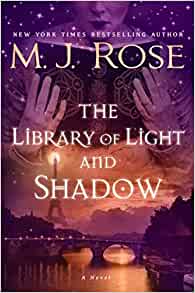
Sunday Review: The Library of Light and Shadow by M.J. Rose

NOTE: This got lost in my drafts folder, so this week, there are two reviews.

Because today is Halloween, I’m reviewing a book about magic, witchcraft, and love.

Descendant of a witch named La Lune, Delphine Duplessi has an unsetting talent of her own. While wearing a blindfold, she is able to draw portraits of her subjects that reveal their deeply hidden secrets. She supports herself in New York by creating such portraits as a party trick, only to have one such exhibition uncover a betrayal that leads to tragedy.

Horrified and consumed by guilt, Delphine returns to her home in the south of France and vows never to do another “shadow portrait,” as she refers to her blindfold creations. But France is no safe haven for Delphine. The reason she was in New York in the first place was that she fled Paris in terror because one of her visions revealed that she was going to cause the death of Mathieu, her one true love.

Recuperating from the New York incident in the house of her mother, also an artist and witch, Delphine rereads the journal she kept during her relationship with Mathieu and tries to fend off the pressure exerted by her twin brother and business manager, Sebastian, to return to doing shadow portraits. Eventually, she discovers that he too is in danger and reluctantly agrees to help him by creating shadow portraits, not of a person, but of a chateau where an ancient alchemical work called Book of Abraham is said to be hidden. The Duplessis’ client is Emma Calvé, a famous and charismatic opera singer who has searched for the work for years.

The novel is atmospheric and contains vivid descriptions. The post-World War I time period felt fresh and was perfect for the story. I found Delphine to be sympathetic and well developed.  The other main characters—Mathieu, Sebastian, Sandrine (the twins’ mother), Emma, and the enigmatic caretaker of Emma’s estate—are all complex and interesting.

As for the story’s premise, the idea of shadow portraits is both intriguing and disturbing. The mystery of the Book of Abraham has a surprising resolution.

However, I didn’t have unqualified enthusiasm for the novel. As much as I rooted for Mathieu and Delphine’s love, the flashbacks to their previous relationship began to lose my interest after a while. And the plot hinges on the interpretations of two pieces of ambiguous information that I was able to figure out very early. Overall, I would say this is a solid four-star effort. Note that this is the third in a series. I haven’t read the other two, but if you decide to read this and care about such things, the first installment is The Witch of Painted Sorrows.

Leave a comment

Filed under Book Reviews, Gothic, Historical fiction, Romance